Thursday, September 3, 2020

Chadwick Boseman


I think what has pushed the outpouring of grief for Chadwick Boseman's passing into another realm for me was the South Carolina governor's order to lower the flags for Sunday, and perhaps my knee-jerk skepticism that the gesture was meant to mollify critics among the state's black population. I cannot recall the last time such an order was made at the death of a native son who was an entertainer.

It seems to me that Boseman's death comes at the intersection of several national crises -- conflict, violence, distrust, disease, uncertainty. We were raw, and losing one so suddenly, at least to the public eye, was deeply wounding.
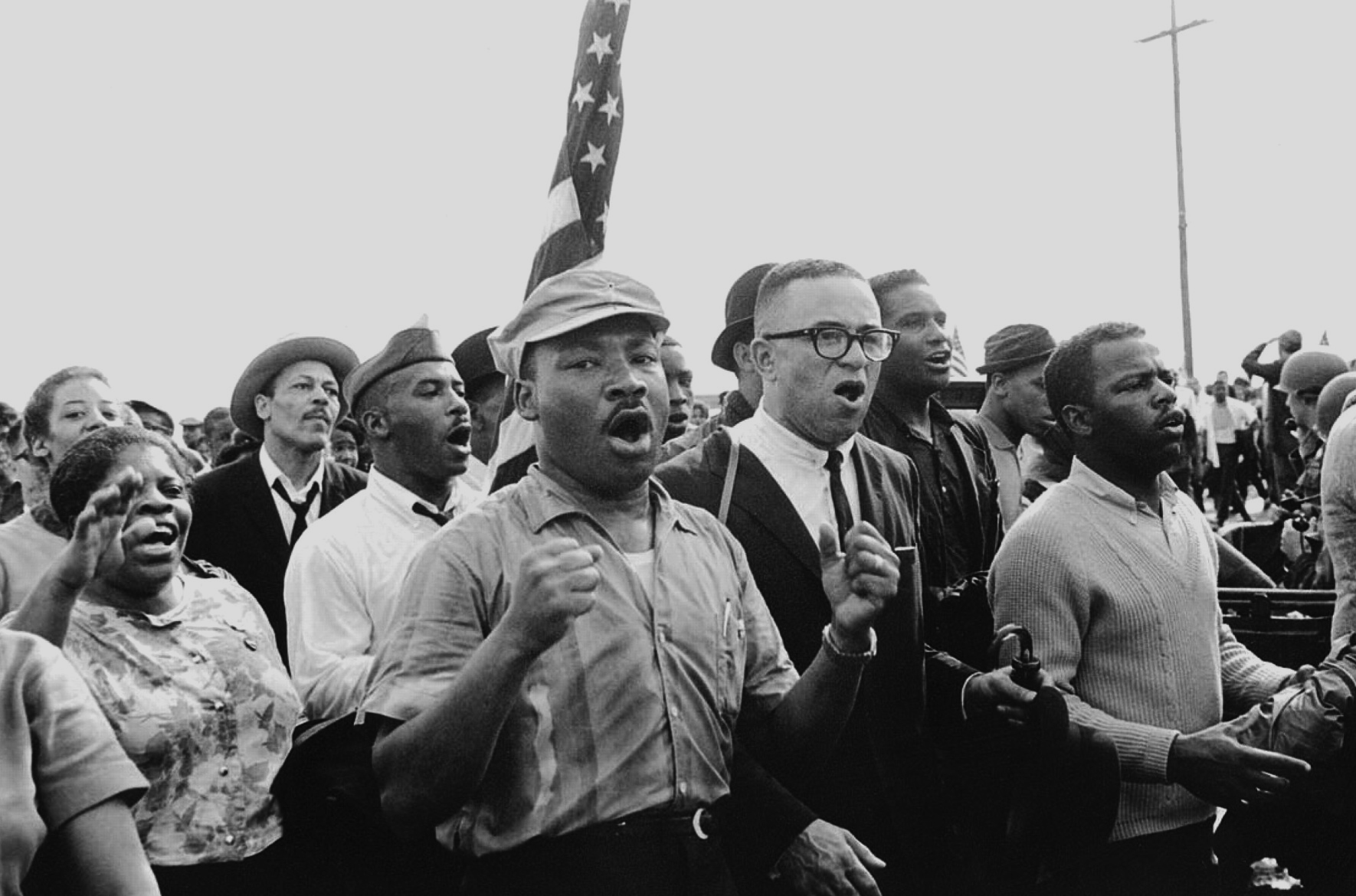
Though Boseman had been a television actor for years before celebrated roles as Jackie Robinson ('13), James Brown ('14) and Thurgood Marshall ('17), those films rode a crest of public interest in stories of great black men (no doubt buoyed by the Obama presidency). His performance as T'Challa in Black Panther (2018) was actually the second time moviegoers had seen the character as he was introduced in the Captain America film two years before. But the world Black Panther the film explored was so different from that promoted by pervasive racist narratives that it sparked a sort of spiritual black nationalism that was not unlike the posture of Black Lives Matter, which was founded several years before, and other movements trying to counter not only anti-black violence but to inspire a spiritual awakening reminiscent of the Black Power movement of the '60s.
The Wakanda salute -- crossed forearms (right over left) pulled against the chest created by Black Panther director Ryan Coogler -- seemed to echo the power salute of earlier black protest but, interestingly, combined ancient African pharaonic poses and the American Sign Language's symbol for "hug" into an affirming resolution.

Tuesday, August 18, 2020

The Krofft Brothers

The Bugaloos - Wikipedia


The Krofft Brothers drove their psychedelic dune buggy right up to the edge of freaky with The Bugaloos in 1970, after toying with televised weirdness with H.R. Pufnstuf the year before. The Kroffts would shift the strangeness into high gear with Land of the Lost four years later. It was almost like my intellectual and creative evolution was being reflected in the shows by these Canadian puppeteers. The Bugs were a mixed band of cheery and playful British human insects who sang tuneful but forgettable songs and battled a whacked out bush named Benita Bizarre -- played by Martha Raye, who never met a scene she couldn't chew to bits. It was all outrageous enough to delight a 12-year-old who had not learned to be annoyed. "Land" was entertaining to a 16-year-old who was constantly finding the everyday world just too "daily" to bear. What was needed was time-travel and parallel universes and nonsensical storylines that replicated an acid trip without the pharmaceuticals. "Land" delivered and negotiated the tight rope well -- neither falling into complete farce nor taking itself too seriously -- at first. It was inevitable that the ridiculousness would spin out of control -- or maybe I just finally grew up.


Wednesday, August 12, 2020

Lia Kim and cultural appropriation

Questions of cultural appropriation lurk in the wings when Lia Kim does her thing. I think Kim is amazing, and I don't think she's harming Beyonce by choreographing to her music, but some might ask, reasonably, how Beyonce's message about her parentage -- "Negro" and "Creole" -- and some other African American references translates into movement for the Korean choreographer.

Lia Kim choreography to Beyonce's Formation

Friday, August 7, 2020

Da 5 Bloods


Spike Lee might be the most exasperating movie master in Hollywood. His films are important. His vision is distinctively individual. But, while always beautifully shot, his pictures are often excessive, their narratives sprawling. Lee has always staged wonderful set pieces and directs ensembles like few others of his generation, with the exception of Tarantino. I love how characters in Lee's films talk to one another. He delivers exposition through dialogue masterfully. Although he is a true craftsman, perhaps even an auteur, he seems blind (or indifferent) to his indulgences. He clearly loves his work and the work of other great directors, and he loves the messages he wants to convey, but his films, including the new Netflix feature Da 5 Bloods, feel a bit too self-referential and focused on their own cleverness and craft, and that detracts from the work.
In Da 5 Bloods, four black Vietnam vets, with the flinty and troubled Paul (a tremendous performance by Delroy Lindo) in charge, return to the country to recover the remains of a fallen comrade (played in flashback by Chadwick Boseman) and a cache of gold (reparations) they left buried there. The four squadmates (Clarke Peters, Isiah Whitlock Jr. and Norm Lewis) are joined by Paul's estranged son David (Jonathan Majors) on the excursion. It is here that the narrative gets choppy, implausibilities creep in, and secondary characters and side issues crowd out what should have been more attention to the rudiments of this expedition. Much is glossed over to make room for the interpersonal entanglements and declamations about Lee's most reliable bette noir -- American perfidy and racism.
That is not to say exploring America's mistreatment of blacks has been overdone; in fact, the opposite is true. It's not been done enough, in my view. And that might be why Lee's films feel so overstuffed. He's trying to cover so much ground in a single work that the end result is interesting -- there is no other filmmaker whose work is always worth seeing -- but too often not as enduring or impactful as it might be.

Sunday, August 2, 2020

Hoodoo Economics

https://i1.wp.com/ryanmcswain.com/wp-content/uploads/2015/10/legion-of-super-heroes.jpg?resize=676%2C1007


I don't get economics. I bought this issue when it was first published back in the mid-60s and paid the listed 12 cents. I probably bought a second comic and gave the clerk a quarter for both. In the 50 years since, the price of comics has increased 3,000 percent. Even with the books being really nice and glossy and more substantial how does that price difference make sense? They're not pharmaceuticals! Is it possible that there is no upper limit for the cost of things and at some point in the future we could be paying 40 bucks for a comic book, 15 dollars for a dozen eggs and 75 for a six of domestic beer?

Wednesday, July 29, 2020

Six Feet Under Again


Re-discovering Alan Ball's life-and-death melodrama Six Feet Under during a deadly pandemic might seem macabre to some. I think this is a perfect time to consider its weighty existential themes.
To me, Ball's addictively provocative series, which ran for five seasons on HBO (2001-2005), had a bristling approach to our most worrisome fixations -- family, sexuality, sanity, aging, parenthood, careers, relationships, and, yes, death. Though each episode opened with a death, some of which were spectacular, and pondered the afterlife, judgment, recompense, etc., the show was about the lives of the Fishers and the characters who were, for good and ill, in orbits around them.
As with most of HBO's longer-running series, the episodes were not all strong. Ball was especially challenged in writing for his Black characters, relying on easy tropes and shallow characterizations -- but he certainly wasn't alone in that regard.
Viewers will have their favorites of the continuing players -- Nate, David, Claire, Ruth, Keith, Rico -- but I would argue that Brenda Chenowith was the series' most compelling character because of the depth of the emotional and psychological wounds that rendered her nearly sociopathic in Season 1 but led her back to the Fishers, to Nate, time after time for healing (which is ironic considering what a holy mess the Fishers were) until by the end of the series she was the character whose development had been the most dramatic and, frankly, inspiring.

Saturday, July 25, 2020

Rights and Wrongs

https://images.jacobinmag.com/2015/01/civil-rights11.jpg

I once asked a newspaper co-worker, a well-intentioned guy with conventional liberal ideals, what white folks got out of the Civil Rights Movement, hoping to challenge the assumption that Blacks were the only beneficiaries. I said a nation that opposes discrimination serves everyone better because no one's talents or contributions are stifled.
"I don't think I would have ever heard The Temptations or Four Tops, " he said.
If I had it to do over, I would not have challenged his response as naive. Rather I would have asked him to explain what he meant. Maybe he had a story about how music helped him lower boundaries between him and black classmates or how his father's music collection laid the groundwork for a conversation about race in his home. Sure, his thinking might have been as simplistic as it seemed but I would have given him space to speak his truth rather than assume I knew his truth.
I can't live that moment over but often I wish I could.

Monday, July 13, 2020

Ramy Season 2


https://i3.wp.com/bestmoviecast.com/wp-content/uploads/2019/04/Ramy.jpg

Now in its second season and renewed for a third, comedian Ramy Youseff's superb self-titled sitcom on Hulu combines familiar American millennial disaffection with Muslim identity codes and conflicts to create a bracingly provocative and funny series about Ramy's search for happiness and God, praying they won't be mutually exclusive. He seems perplexed by humanity and devotion, qualities he seems to possess in abundance, and wonders, often aloud, why actual goodness seems so elusive. He's a guileless hero whom we're rooting for even when he falls short of perfection, as he often does.

Saturday, July 11, 2020

Purlie

Fifty years ago, a small but spunky musical about "race relations" in the South ran on Broadway for about 700 performances. The musical was based on a play by the celebrated actor and dean of black theater and motion picture performers Ossie Davis -- Purlie Victorious. The play had earlier been adapted into a motion picture starring Davis and his wife, Ruby Dee, Godfrey Cambridge, a young Alan Alda and Sorrel Booke, whom many would come to know as Boss Hogg on The Dukes of Hazzard. (A link to the full motion picture is below.) The play has long been included in published anthologies of outstanding theatrical work as an example of satirical social commentary.
The 1970 musical, whose title was shortened to Purlie, told the same story as the stage play -- a con-man preacher returns to the Georgia plantation of his birth to try to pull one over on the Ol' Cap'n, win ownership of a cherished old church and "free" the plantation workers from their lives of picking cotton. The show starred new faces Melba Moore (Cousin Lutiebelle) and Cleavon Little (the title character), both of whom won Tonys for their performances. Five years later, Little would go on to international fame as the sheriff in Mel Brooks' Blazing Saddles. Troubled with chronic stomach and intestinal problems, Little died in 1992, at 54. Moore will be 80 in October.


Purlie is a small show but has several rousing musical numbers -- "I Got Love," "Newfangled Preacher Man," "Walk Him Up the Stairs," among them -- and has seen a few revivals and restagings over the years, with the most familiar likely being the television special in 1981 that starred Moore, Robert Guillaume (Benson) and Sherman Helmsley (George Jefferson of The Jeffersons), who like Moore was an original cast member.

Les Miz


Thirty years before Hamilton took Broadway by storm and rewrote the modern musical, another epic production with historical roots was taking over the world. Les Miserables ran on Broadway from 1987 to 2003, for nearly 7,000 performances. It has been staged in London and Toronto, touring companies have traversed the globe numerous times and we all know the award-winning 2012 film adaptation with Hugh Jackman, Russell Crowe and Anne Hathaway.
Though not as richly layered and constructed as Hamilton, Les Miz is a bigger and more conventionally musical show. It is a sung-through production, that is, it contains no actual spoken dialogue. On that score, Hamilton contains very little, and most of its dialogue is in verse.
Les Miz brims with classical melodrama and sumptuous songs for solo artists, small ensembles and large choruses. In this way, it is more like opera than musical theater. And like the best of French or Italian opera, Les Miz has great songs for the tenor hero.
This song -- Bring Him Home -- comes mid-way through Act II. Jean Valjean prays for the safety of the young liberator Marius, whom Valjean has grown fond of. The opening of the song is pitched quite high and the piece has a wide dynamic range so it's a true vocal workout. Nick Cartell starred in the show's recent national tour and he pours it on in this cabaret performance of the showstopper.  

Darlie toothpaste


This Chinese toothpaste was the unequivocally blackface Darkie for more than 50 years. Half of the company was bought by Colgate-Palmolive in 1983 and in '89 changed the name and image to "Darlie," which is inoffensively nonsensical. Let's hear it for not being racist!

Tuesday, July 7, 2020

Hamilton (streaming)


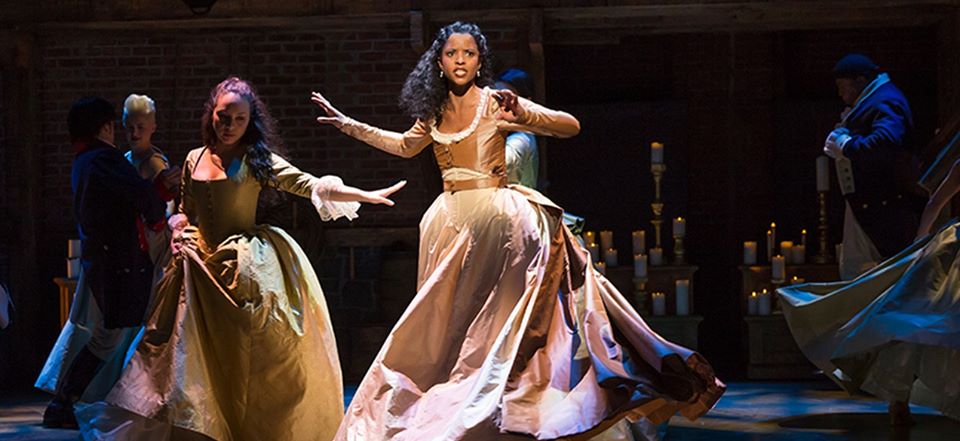
I've been familiar with Hamilton's score for some time but watching it brings home how much of a stunner it is; it bridges worlds, combining traditional and contemporary musical performance and expression to serve a story that is both conventional (boy overcomes odds to attain what he wants and nearly loses what he needs) and strikingly modern, while also being both historical and revisionist. The machinery of the production -- all of that wordplay and bodies in motion -- is nearly overwhelming. It is a singularly brilliant vision, a fully realized social and political statement with towering musicality AND street cred.


The Hamilton original Broadway cast recording has been out for nearly five years. It has sold more than 6 million copies and is the best-selling cast recording ever. Those five years have given aspirers plenty of time to load their covers of favorite numbers onto YouTube. I've watched my share. Some are valiant attempts. Others are just plain awful. Some are those inexplicably popular Reacts videos (people taping themselves responding to performances) and then there are the occasional legitimate renditions by someone with skills.
I would wager no number from the show is more popular than "You'll Be Back," King George's mincing scolding of the ungrateful colonists as performed by Pennsylvania native Jonathan Groff (Mindhunter). Lin-Manuel Miranda, whose net worth is estimated at between $40 and $50 million thanks to Hamilton, has said the addition of King George's character was fairly late in the musical's creation. And his winning line? That was offered by actor Hugh Laurie (House), who when Miranda described the scene he was imagining sneered in King George's voice "You'll be back." Score!
The show's theatrical complexity becomes clearer on repeated viewings. And, for me, that means gathering more evidence of Lin-Manuel Miranda's generosity as the composer. He has written so many wonderful songs for the large cast. Several of them are true, Broadway-caliber vocal workouts no doubt written to silence those tempted to set the show aside as a lightweight, hip-hop experiment. Miranda really lets these talented players shine. Two of the best examples from Act 1 run nearly back-to-back -- Angelica Schuyler's "Satisfied"(https://www.youtube.com/watch?v=InupuylYdcY) and Aaron Burr's "Wait For It" (https://www.youtube.com/watch?v=ulsLI029rH0). Both are masterful, challenging numbers, melodic lines overflowing with narrative content and character revelation. Renée Elise Goldsberry (Angelica) and Leslie Odom Jr. (Burr) won Tonys for their work, as did Daveed Diggs for the dual roles of Lafayette and Jefferson.


Saturday, June 20, 2020

Seal

It's been nearly 30 years since Seal (Henry Olusegun Adeola Samuel) released his first self-titled recording and now iconic videos on the world. Almost immediately the stories about his facial scarring took off. Because of his complexion, his clipped British accent and punk-rock fashions, the propulsive beats of his most popular songs and his beaded dreads, he must have been some African prince and the markings part of an exotic ritual. It was actually years before I heard that the scars were left by a form of lupus. Looking back, it seems to be in defiance of something that would inhibit someone less self-possessed that Seal's face is never hidden. His gaze is steady and assured. He won't avert his eyes before you do. That, of course, only adds to his attractiveness.
Lately, I have been revisiting Seal's early catalog -- his first three albums -- Seal I, Seal II and Human Being. He has a distinctive way with a musical phrase that makes his songs eminently singable, even when the message might be a little cloudy. I think I might like this song best -- Newborn Friend: https://www.youtube.com/watch?v=wQOmKZCUAy8I wash my faith in dirty water
'Cause it gives my mind a little order
And I play that game, just like I should do
But my whole world, slips away
I live my life, I live it slowly
And I take my time, I'm in no hurry, yeah I'm livin'
And when I go then I would surely
I would dance with a total stranger
And hold them in my arms
Hell, there could be no danger if I open up
'Cause when the cryin' starts so
If I chant for happiness
Maybe that will make me feel better?
I can't change my ideals, I can't lose my desire
Oh, if I chant for happiness
Maybe that will make me feel better?
I'd be your newborn friend for the world

Highwaters

The Village of Sandhills had been struggling with abandoned storefronts and empty "apartment homes" for years before 'Rona came callin'. World Market closed its location there earlier this year. And, of course, Penney's is bankrupt. Sad.
I was sort of ambivalent about World Market, frankly. While it has cool stuff in it, and they price their wines pretty competitively, thematically I feel the "world" aspect is hype. They do have an eclectic collection of packaged food stuff but nothing I would keep as a staple in the cupboard (if I had a cupboard). And I don't know what global crockery looks like.All of Sandhills looks beset and highwater now. I mean it looks like it's strapped and making due. That was the real shame of wearing "highwater britches" -- it meant your people were too broke to keep you in clothes that fit properly.
At the village, busted "apartment home" windows are boarded, "available for lease" signs are beginning to sag in retail windows, the grass outside the Regal is wild and thatchy, and movie posters for little-seen features are faded from overexposure to the Carolina sun. It's pretty depressing.
Maybe the village will be re-imagined by some really creative types and see a new life, repurposed and popular, like what Steve Urkel and Dolce and Gabbana did for highwater pants.
Where there is life ...


Wednesday, June 17, 2020

Officer Friendly

I remember the Officer Friendly campaign from when I was a youngster, but I don't remember street cops from my childhood, and I certainly don't recognize the idealized world father and son illustrators Hy Hintermeisters depict in their series from the '50s. It appears to be a suburban enclave where avuncular police officers help little white children get to and from school. Yes, Rockwellesque but I think the Hintermeisters were not as clear-eyed about America as Norman was.


This illustration is going for approachable but serious. I'm not sure that's the message 
that was needed.


It's not clear what's going on here but it's a bit disturbing.


Yes, entitled princess crossing.


I'm not personally familiar with the world the Hintermeister's set this series in 
but it's not unlike the one on popular television of the time.


The series seemed to be committed to displaying good behavior 
and interactions between the officer and the children.


I love this shot from the '70s. I don't really care if it's staged; it has a great vibe to it.


Uncle Natchel

The Hy Hintermeisters were also known for their character Uncle Natchel (Natural), who was the brand image for Chilean Natural Soda, a soil additive mined in Chile. I do not get the connection but the character appeared on Chilean Natural Soda calendars for decades. I only recently discovered Uncle Natchel, as the character, which was introduced in 1935, was retired in the '60s.


The Hintermeisters created a world where this kindly old black man was a companion to, apparently, lonely white children. Absent, of course, is any hint of Uncle Natchel's own family or children.


The Hintermeisters often featured young boys and girls together in manners that didn't seem quite age-appropriate. The freakish bow-tied Buster looks like Howdy Doody.


I'm not sure if this is supposed to be the same couple from the previous slide but the dogs are nearly identical.


This might be my favorite of the series, if one is allowed to favor an image so steeped in racial stereotypes and societal fictions. The banjo, of course, came with enslaved Africans and became a staple of American roots music. The Hintermeisters were from New York, so it's understandable if their knowledge of southern life owed a debt to Harriet Beecher Stowe.

Mark Stewart a/k/a Stew


Mark Stewart a/k/a Stew is my favorite songwriter. I don't think I'm being outre by picking someone few people outside of L.A. or New York know. I'm too old to play that game. And I'm not saying he's the best songwriter in the world because what a ridiculous claim that would be. Stew's songs -- highly stylized baroque pop that comment on everything from romance to race -- never fail to connect with me, even if they're not exceptionally composed -- although his best stuff is. He's just really melodic and literate. Even though he never releases the lyrics to his music.

Stew is probably the most unfiltered enigma performing popular music. For years, he fronted a band called The Negro Problem, in which he was the only "Negro" member. The band were critical darlings and huge scene-makers in L.A. Stew's first solo album, Guest Host, released 20 years ago, was named Album of the Year by Entertainment Weekly. His second full-length recording, The Naked Dutch Painter ...  and Other Songs, received the same accolade two years later.

He and his writing partner, Heidi Rodewald, wrote the 2008 Tony Award-winning musical Passing Strange, the last performance of which was filmed by Spike Lee.  Stew won the Tony for Best Book. The show is a semi-autobiographical tale of a young black man who leaves his home in Los Angeles to discover himself (racially and sexually) and his musical voice in Amsterdam and Germany. The musical features several melodic themes from Stew's earlier work.

Here is a lovely song from late in the show, where the narrator, Stew, explores the connection between performance and pain.

https://www.youtube.com/watch?v=UckfZ8rds-g

Sunday, June 14, 2020

Haters gonna hate


The Black Mirror episode Nosedive, one of the most highly praised for the celebrated series, is set in a world where the expression "haters gonna hate" does not exist. One's wealth and well-being depend on how well-liked one is, as measured by interpersonal exchanges that are rated by the other person. High ratings get you substantial discounts and upgrades on purchases and services. What a brilliant way to shape human interactions for the better in an acquisitive, status-conscious world! The episode's lead, an intrepid Dallas Bryce Howard (this woman, Ron Howard's daughter, might be the bravest young character actress currently performing), discovers how quickly one can fall out of favor after a lifetime of building affirmation points. Her fall is precipitous but she eventually discovers her true value through some healthy animosity and truth-telling.

The problem with this clever story (co-authored by Rashida Jones of #blackaf) is, well, "haters gonna hate," no matter what we do. Somebody's gonna resent your drag or your swag -- what you wear or how you act. Some folks have been reared to be sensitive to this possibility and to be complimentary and non-threatening, to cultivate lots of friendships and try not to make other people uncomfortable. We should have people liking the hell out of us at all times because it will pay off in the end.

Others of us may have received the same counsel but learned eventually that hatred will precede some of us into a room and will be sitting at the table waiting. This is why some people of color ask when invited to an unfamiliar place or event, "Who's gonna be there? Anybody I know?" We're trying to gauge the "hate potential." If other people of color will be there then it shouldn't be an openly hostile crowd.

I'm no masochist, but I don't use that meter as much anymore. I think it's more a factor of my age than of my becoming inured to people's hostility. I've been to some events that were cavalcades of microaggressions and left annoyed but relatively unperturbed. I handle indifference and animosity as they come. I set my mind (swag and drag) as I suspect many people of color must -- on "IDGAF." Life's too short to spend it humoring fools and being a fool's fool.

Thursday, June 11, 2020

Hambone's Meditations


The single-panel comic Hambone's Meditations was a front-page feature in The (Memphis) Commercial Appeal for 52 years, 1916 to 1968. The title character was a stereotypical minstrel black man whose musings about the boss and Miss Lucy and Ol' Tom were rendered in dialect. He was reportedly based on an actual person. The panel was drawn and written by J. P. Alley until his death in 1934 and later by his wife and children. One can detect changes in the character over time; his exaggerated features became less so but the gutbucket wisdom persisted. Alley's son Cal also drew The Ryatts, a syndicated strip about the domestic adventures of a white family. It stood in stark contrast to the other, a study in inequality. Hambone's Meditations was discontinued in November 1968, following pressure from civil rights organizations who argued its depictions and humor were offensive and harmful. It might also be noted Martin Luther King Jr. was shot to death on the balcony of a Memphis motel seven months before the comic was discontinued. Change follows death.

Thursday, June 4, 2020

Tuesday Morning

Tuesday Morning has become my go-to "wanderland," a place in which I roam to marvel at all the brightly colored crap on display for thrifty nesters. Maybe that's too harsh. It's not all crap. A lot of stuff is kinda cool if you're into discount tchotchkes with cloying messages about the joys of being a homebody and how God loves you and me and pets and the United States. You might think only women take their custom to Tuesday Morning but you would be wrong. Every time I've gone, there have been men and women, singles and in pairs, creeping up and down the aisles (now uni-directionally because of COVID-19). They were buying bathmats and birdfeeders and jars of olives stuffed with garlic, pillows and end tables in mad displays of impulsivity. Today I bought shower curtains and a cool drying cloth and wooden rack to use after washing dishes. (I never knew such a thing existed!) The stuff is remarkably chea ... , er, inexpensive and I love the dinginess of the store's carpeting. It's like visiting an elderly relative who's an unreformed hoarder. Shopping there is like going out for comfort food, all the guilt without the carbs. Tuesday Morning is Spencer's Gifts for people who would rather burn pomegranate-scented candles and nosh on tea biscuits than have sex.


Friday, May 29, 2020

Thoughts about deliverance


“We Shall Overcome” | AMERICAN HERITAGE
I've been thinking about deliverance a lot lately. It's a concept that's central to Christianity as I know it. Perhaps it is one of the main contributions of the Judeo in Judeo-Christian.
Christians study deliverance from sinfulness, deliverance from tyranny, deliverance from uncertainty and doubt, deliverance from temptation, deliverance from bondage, deliverance from pain and suffering, deliverance from eternal damnation. It brings to my mind passage through trials.
That's what I suspect those who first sang "Didn't It Rain" were picturing when they first were hearing about the Bible and Jesus. But not, as Massa might have assumed as he listened from the porch of the Big House, the end to Noah's tribulations during the Great Flood and the believer's eternal reward for being "good and faithful servants."
No, they sang about the end to "40 days and 40 nights" of the toil and terror of chattel slavery. But even after Emancipation, and when the words and notes of the great "Negro Spiritual" were set on paper in 1919, the song's full meaning was intact. And I feel it retains its meaning to this day.
"Well, it rained forty days, forty nights without stoppin'
Noah was glad, when the water stopped droppin'
When I get to heaven, sit right down
Askin' Jesus for my starry crown."
While it most certainly intones assurance of heavenly reward, it also says to me, with clarity, the present world will be set aright for it is wicked.
This rousing, jubilant rendition is by Hugh Laurie, known to most who know him as Dr. Gregory House from the television series House. Laurie, as was demonstrated on the program, is an accomplished musician who has great affection for the American songbook. Jean McLain is the featured vocalist.

Tuesday, May 26, 2020

Chernobyl


I've tried NOT to watch Craig Mazin's astonishing TV series Chernobyl -- the nearly hour-by-hour recounting of the 1986 Soviet nuclear reactor disaster -- through the prism of our own national catastrophe. It's really tough when a parade of craven apparatchiks snap to, salute, toady, bleat and lie as millions are poisoned by bureaucratic bungling and incompetence and motions toward truth-telling are silenced by threats of bullets or defenestration.
With apologies to Stephen Stills, "I think it's time we stop, children. What's that sound. Everybody look what's coming down.   

The final episode is wonderfully written and this scene (link below) is particularly powerful, as the two men leading the clean up after the meltdown reflect on human frailty, the tyrannical Central Committee of the U.S.S.R. and the men and women who were forced to do its bidding. Both Stellan Skarsgard and Jared Harris are stellar throughout but especially here. 

I reflect on this scene now, in the midst of a health care and economic catastrophe, the severity of which might have been averted if wisdom had trumped pride, and wonder if its too late for "one good man" to help us. 

Friday, May 22, 2020

The Crowd (1928)


Occasionally my mind wanders back to a silent film I watched when I bought my first video cassette player (it didn't record). King Vidor's The Crowd (1928) dates back to the movie era right before sound but is a classic because its story of lucklessness is pretty freaking universal. The young couple at the center of the picture are nice as they can be even though John is a big talker (well, you know what I mean) and Mary has big hopes for them and is not real good at hiding her disappointment -- especially when his successful buddy is around. The marriage doesn't seem to be working when Mary gets pregnant. John commits to sticking with it and doing better, but he's a faceless drone in an insurance company, another suit in a New York office, and can't seem to make his mark -- until, a detergent company buys his contest-winning slogan for 500 smackers. Now he and Mary and their kids will be on Easy Street! Except, when the happy parents call their kids from their apartment window to come see the presents Daddy has bought with his winnings, the littlest one gets hit by a truck while crossing the street. Yes, it's a festival of unhappiness (albeit with a fairly bright ending) that puts all of the news of pandemic pain and misery in a new light.

Saturday, May 9, 2020

Little Richard


Little Richard; Dead


To say Little Richard was conflicted is certainly to understate the case. Out/In, Gay/Straight/Omnisexual, his story shifted over the years. It seemed like he couldn't square his sexual nature with Jesus. He ultimately denounced LGBTQ as contrary to God's plan.
Leon Russell may have taken some liberties when he wrote this tune about Little Richard, swapping gender references and titling it what he did. But, to me, it is an affectionate tribute to a man whose style of rock 'n' roll was all through Russell's own high-powered, piano-pounding, scream-and-shout revivalism.
"There's a rainbow around my beautiful face and I'm living in a pot of gold."

Sunday, May 3, 2020

Normal People


Streamers who enjoy highly emotive drama with credible characters who you love even when, or perhaps because, they behave badly will love Hulu's sweetly endearing Normal People. We meet two Irish teens in the last year before going off to university. The brainy Marianne (Daisy Edgar-Jones) is icy and angry, and we discover why when we meet her mother and brother. The quietly bookish jock Connell (Paul Mescal) is eaten up with unaccountable insecurities that seem to lighten when he's with the irascible Marianne, who fancies him. His mother works for Marianne's and through that arrangement boy and girl become lovers in some of the most wonderfully tender scenes of intimacy I've seen on screen. But they're a secret, to avoid the "awkwardness" of his mates' ribbing. One can anticipate the inevitable clash, and the crisis is pure devastation, especially for Connell, who doesn't know how to own his feelings. The series, which covers a number of years of romantic entanglements for the pair, features brief episodes filled with insight and candor.

Eagle Eye

  In 2008, D.J. Caruso directed an AI-gone-rogue thriller that starred real-world PITA Shia LaBeouf and the always welcome Michelle Monaghan...