Friday, April 14, 2017

Easter movies


Only one of these five favorite Easter movies features Jesus as the central on-screen characters. Maybe I find the more compelling Easter stories show how the message of the carpenter from Nazareth affected others. Jeffrey Hunter was a Hollywood handsome Jesus in King of Kings in 1961, one of the more entertaining portrayals on film, IMO. The same year Anthony Quinn, not Hollywood handsome, starred as the criminal who was released by Pilate in exchange for Jesus. Although nobody knows what happened to the man after he was released, in Hollywood Barrabas, himself, would end up on the cross.
In 1959, Charlton Heston was still riding the wave for starring as Moses in The Ten Commandments three years before when he was cast as Judah Ben-Hur, in the film that included, according to some, a veiled gay subtext in the relationship between Ben-Hur and his boyhood friend, Messala, played by Stephen Boyd.
In 1953, Richard Burton played the ambitious Roman tribune who was ordered to oversee the Crucifixion and was haunted either by guilt or Jesus until his martyrdom, with Jean Simmons, in the last reel. I'm still not sure why she gets into heaven for just loving her man but ...
And one year after The Robe, Victor Mature reprised his role as the tribune's Christian slave in Demetrius and the Gladiators, in which Demetrius, who has inherited the robe from his martyred master, becomes a champion in the arena but falls away from the faith before realizing his error and returning to the fold as a choir of angels sings.

The Last Supper


Many Christians observe the Thursday before Easter as the day of the Last Supper -- quite likely one of the most painted (and parodied) events in Christian Scriptures. Here are a few of my favorites -- the traditional with an especially wan St. John leaning into Jesus' lap, a contemporary homies rendition, Anthony Falbo's cubist dream, the cast of Battlestar Galactica in an homage, and a most righteous gathering of brothers.

The Crucifixion


I believe for many in the Christian tradition, The Crucifixion is the central emblem of sacrifice and forgiveness (or expiation as I learned in Catholic school). Others might view it as simply evidence of human sinfulness or corruption. And others have used it to condemn Jews. (Using the Crucifixion to persecute others is ironic and tragic.) I'd only recently discovered George Bellows' striking painting but it has become one of my favorites. It contains the abjection of that sad day but other intangible qualities as well. I'm especially drawn to the purple figure at the foot of the cross. Such loss and despair. Peace

Tuesday, April 4, 2017

Life


Daniel Espinosa’s Life has enough claustrophobic tension and alien weirdness to make it a diverting but not groundbreaking entry in that sci-if sub genre of film that warns of reckless poking and probing of things best left alone. They differ from those films that depict alien intervention in our destructive nuclear build up (The Day The Earth Stood Still) or nuclear experimentation (Godzilla). Life’s message seems to be that curiosity – in this case wondering about life on Mars – can kill a bunch of cats, especially if they are trapped in a $200 billion tin can orbiting the Earth. The cast playing the international space station crew includes Ryan Reynolds doing his glib alpha dog thing as project engineer, Jake Gyllenhaal doing his pensive beta male thing as the medical officer and Rebecca Ferguson as a lovely crew member with no discernible duties. Things go bad for the crew after they retrieve a Mars probe carrying soil samples and the project’s biologist (Ayrion Bakare) jumpstarts some dormant cells that develop an unhealthy attachment to the crew. The story might not be original but the alien is a pretty cool creation. The ending might be a bit too cynical for some however.

Sunday, March 12, 2017

Logan


James Mangold has a crafted a surprisingly introspective film in Logan, as the X-men universe closes the book on The Wolverine – for now. Hugh Jackman returns as an aged and battered version of the endearing, metal-clawed badass Logan, who is now holed up in an abandoned oil field in Mexico with an occasionally demented Professor X (Patrick Stewart) and the peevish albino mentalist Caliban (Stephen Merchant). It’s 2029, and mutants are all but wiped out, their powers essentially neutralized by biological weaponry. Logan’s own regenerative abilities are just about gone although he is still metallically enhanced. These events have brought Logan to point where he’s saving to buy a boat, so that he might load up his shipmates, and set off for the distant horizon, leaving humanity to its own devices. The plan is interrupted by the appearance of a 10-year-old girl (Dafne Keen) whose dour demeanor and retractable claws suggest she and Logan have something in common. She is being chased by the miserable Dr. Rice (Richard E. Grant) whose potions are responsible for the mutant extermination and whose experiments South of the Border have created an army of “gifted” children who he hoped to turn into fighters. Mangold doesn’t hold anything back in this swan song for the beloved Wolverine as he and the nimble moppet slash, disembowel and decapitate like there’s no tomorrow. And, in the end, that’s the film’s real poser: How does one measure the value of a life when it’s been spent taking the lives of others. Does one such as the Wolverine deserve to sail off into the sunset?

A Cure for Wellness


Gore Verbinksi, the visionary behind the Pirates of the Caribbean franchise, is the mind and eye behind A Cure for Wellness, a convoluted tale of madness and quackery that he wrote and directed, set in a mountaintop aqua-therapy sanitorium in the Swiss Alps. The film stars Dane Dehaan as Lockhart, an ambitious and unscrupulous New York investment officer who is dispatched by his board to retrieve one of their own (Harry Groener) from the Alpine retreat, from whence the absent member has dispatched a puzzling note saying he won’t be coming down from the mountain. Once in Switzerland, Lockhart meets the sanitorium’s medical director, a winningly oily Jason Isaacs of The OA (who does creepy better?) and his young ward Hannah (Mia Goth), a pouty and unconventional barefoot beauty who wanders the grounds aimlessly. Of course, little is as it seems, and after an auto accident (the lately ubiquitous deer vs. car crash), Lockhart finds himself confined and doesn’t like that one bit, as he is eager to get back to New York. His encounters with the oddly cheery patients and the facility’s Stepford staff lead him to believe there’s something up with “the treatment.” There is indeed, but one must sit through two hours of not entirely satisfying build-up to get to the big – baffling – reveal. Still and all, if you like beautiful scenery – Verbinski has poured breathtaking vistas into this watery movie – and a story with a couple of unanticipated shocks this film might be your cup of tea.

John Wick: Chapter 2


Chad Stahelski’s John Wick: Chapter 2, as the title suggests, picks up the story where its predecessor left us – with the bruised and bloodied but seemingly indestructible Wick (Keanu Reeves in a role that demands very little acting but a lot of close-contact sparring) intent on reclaiming his purloined Mustang from a Russian mobster whose son nicked it in the first movie (and killed Wick’s dog) and was eviscerated by Wick for his trouble. The opening sequence sets the muscle-and-mayhem bar pretty high as Wick pulverizes automotive and human bodies that are in his way. By the end of the opening 10 minutes of Chapter 2, the body count is already approaching 50 with bullets flying through flesh and crania and blood covering walls, floors and furniture. It’s a riot. But there’s no rest for the weary because even after deciding to retire from the assassin’s trade, a visit from an effete Italian mobster (Riccardo Scarmarcio) pulls Wick back in. The sequence that follows Wick as he gets outfitted by assorted specialists in the Italian weapons and sartorial underground is great fun, played tongue-in-cheek, but not as amusing as the gunfight in the Roman catacombs or the fight on a New York subway between Wick and fellow killer Cassian (Common) or the one in a mirrored exhibit in an art museum. Yes, it’s all deafening and numbingly violent but so outlandish that you can’t help but go with it. It’s Grand Guignol theater but at least they don’t kill the dog this time.

Saturday, February 11, 2017

Elle


Dutch director Paul Verhoeven is likely best known to American audiences for the bloody sci-fi adventures Robocop and Starship Troopers and the psycho-thriller Basic Instinct. Others might appreciate more his pre-Hollywood period, when he directed uncompromisingly graphic films set in various historical periods that featured people scarred by choice and circumstances guided day-to-day by their little understood appetites. The French language Elle, which features a remarkable performance by Isabelle Huppert, is a welcome return to that time for fans of Verhoeven’s “foreign” films.  Huppert plays Michele, a middle-aged businesswoman who is raped in her home at the beginning of the film and tries to identify her masked assailant, presumably to get revenge. We discover over the course of the movie that she suffered an unspeakable trauma as a young girl and lives amongst those ruins with her manchild son, Vincent (Jonas Bloquet), her disaster of a cougar mother (Judith Magre) and her professionally stifled ex-husband Richard (Charles Berling). Huppert, who has been nominated for her role as Michele, is in nearly every frame of the picture, including several startling scenes of brutal sexual assaults. These depictions are not for the squeamish and the film’s overall tone might be too dark for many viewers but the story, based on the novel by Phillipe Djian, is provocative and perceptive. Highly recommended.

The Founder

John Lee Hancock’s biographical melodrama The Founder is the story of Ray Kroc, the man who built the McDonald’s empire with tenacity and grit and then strong-armed ownership of the company from the two brothers who began it in San Bernardino. When we meet Kroc (a never-better Michael Keaton), it’s the 1950s and he’s schlepping milkshake mixers from pillar-to-post trying to get fast food restaurants to take interest. No dice until his office receives an order for eight from a small burger joint in the middle of nowhere in California. The two brothers, Mac and Dick (John Carroll Lynch and Nick Offerman, respectively), have created a “speedy” system that can turn burger orders around in seconds and an iconic symbol of their enterprise – golden arches. Kroc, a silver-tongued devil, convinces the brothers he can take their model and reproduce it across the country. The three enter into a contract and almost immediately Kroc begins to chafe under the deal; he’s weary of the brother’s “take it slow” mentality and he finds effective ways to work around them, expanding the company in the Midwest. His myopia and egotism lead to trouble with his wife (the reliable Laura Dern) and with the brothers, who worry they’re losing control of their business. A showdown is inevitable. All of the performers and the period details are terrific. The take-away? Being a slimeball can indeed pay off. 

Split

M. Night Shyamalan’s films are so hit and miss that it’s actually entertaining to bet on how and when any given picture will fall apart. His latest, Split, is more successful than most, mainly because it features James McAvoy in the gimmicky role of Kevin, a man with 23 separate personalities who kidnaps three teen-aged school girls to sacrifice to “the beast within.” We get a glimpse at only half-a-dozen of them. Why then 23? More is more? The gutsiest of the kidnapped girls, Casey – played by Anya Taylor-Joy of last year’s best horror flick, The Witch – proves to be a formidable adversary for the lot of them and for the most disturbing of reasons. (I believe this is the film’s anticipated twist.) Though the movie has some creep to it, especially Casey’s backstory, it’s the relationship between the crowded Kevin and his shrink, an earnest but miscast Betty Buckley, that is the real mystery

Patriots Day


Peter Berg directs fiercely masculine, patriotic films that are grounded in Hollywood liberalism, that is, they are not jingoistic celebrations of American exceptionalism. Rather, they depict the exceptionalism of Americans and the compassion we exhibit in a crisis. While Berg’s work is often artful, after a fashion, to my eye, it is mainly methodical and structurally pristine. In other words, Berg’s stories are always told clearly and economically. Patriots Day, his retelling of the manhunt that followed the Boston Marathon bombing in 2013, is taut and completely engaging and features winning performances by Mark Wahlberg, J. K Simmons and Kevin Bacon as city and federal law enforcement officers chasing bombing suspects, the Tsarnaev brothers (Alex Wolff and Themo Melikidze). The film seamlessly weaves together the stories of the first responders, the victims of the attack and those whose lives were affected – or ended – by the brothers as the radicalized terrorists attempted to leave Boston for New York City. It’s a fine picture. Recommended.

Jackie


Pablo Larrain’s elegant motion picture Jackie is an intimate recounting of the week after the assassination of President Kennedy told from the perspective of the first lady. It is a sympathetic film about a woman many pitied and some disliked but many – over time – came to admire, if not love. In the style of the great masters of cinematic character studies like Cassavetes, the camera is never far from its subject as she almost sleepwalks through hell from Dallas to Washington to Hyannis Port, weeps and rages and attempts to drown her despair in pills and alcohol. Larrain explores how the president’s death transformed this woman who, as we come to discover, was barely holding it together as first lady – unnerved by threats to her husband and the country, doubting God, his purpose and hers – when she becomes the most public of widows. Natalie Portman is riveting as Jackie Kennedy and gives the best, most fully sustained performance I’ve seen over the past year. A long sequence in the middle of the film follows the mourning Jackie as she wanders from room to room in the White House, draping pearls around her neck, pulling on gowns, a burning cigarette always within reach, and the soundtrack of the broadway musical Camelot, one of JFK’s favorite recordings, playing in the background. It’s mesmerizing and heartbreaking.

Wednesday, January 4, 2017

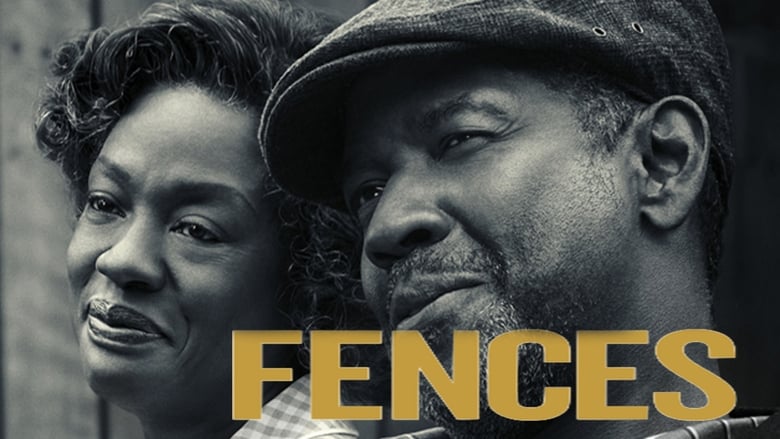
Fences


 https://image.tmdb.org/t/p/w780/f07DKDBg8HAJVca4WqX5eJ1hZEw.jpg

Short Cuts: Denzel Washington has taken the searing lyricism of August Wilson's Fences and put it on screen with the play's length edited a bit but with no harm rendered to its classic beauty. Washington and co-star Viola Davis reprise their Tony-winning performances as a middle-aged black couple in 1950s Pittsburgh who find their worlds being changed by forces they are not fully prepared to face. In this regard, the eponymous fence symbolizes safety from threats both societal and spiritual; it's a brilliant metaphor. Yes, as with many other 20th century African American literary works, Fences examines "deferred dreams" but without a hint of sentimentality or artifice. It's a powerful film.

Lion

Short Cuts: Garth Davis delivers tears of sadness and joy in Lion, a weepy true story of a 5-year-old Indian lad who gets lost 1,000 miles from home, enters the world of India's lost children and is adopted by an Australia couple, saving him from certain deprivation and exploitation. The rest of the film is 25 years on, as the boy wonders about his home, his mother and siblings. Dev Patel plays Saroo as an adult but the marvelous child actor Sunny Pawar is the heart of this moving tale,  which delivers breathtaking vistas and squalor but too much cinematic shorthand to draw us deeply into what must be an amazing story.

La La Land

Short Cuts: Damien Chazelle's La La Land, like his earlier triumph Whiplash, is an exuberant film that explores the territory between love and passion, with the world of music as the backdrop. In La La Land, a jazz pianist (Ryan Gosling) and an underemployed actress (Emma Stone) are finding little more than frustration and disappointment in Los Angeles, where being good or good enough doesn't pay the rent. What does pay the bills (playing Christmas tunes in a restaurant and serving up lattes on a movie studio lot) is soul-deadening, but the two find both inspiration and misdirection in each other. Chazelle raises (often literally) the quality of this boy-meets-girl tale with splendid (and frequently quite hummable) tunes and dance numbers that aren't as dazzling as Astaire and Rogers but are enchanting, nonetheless. La La Land is a beautiful and affirming picture. Highly Recommended.

Friday, December 16, 2016

Manchester-by-the-Sea


Casey Affleck lumbers through Kenneth Lonergen's Manchester-by-the-Sea like a man with the burdens of the world draped over his shoulders, and, in a sense, they are. In a commanding, heartbreaking performance, Affleck plays Lee Chandler, an apartment handyman in Quincy, Massachusetts, when we meet him. Lee is the fellow who recedes into the background in bars and at parties until he's riled, and then he's a bruiser. Most of the time he doesn't seem to want or need anything the world offers but he's also by turns listless and combative, and it seems to have something to do with events back home in Manchester-by-the-Sea. When he receives word his older brother, Joe (Kyle Chandler), has suffered a heart attack, Lee drives the 90 minutes to see about him but is greeted with news of his death and later that he's been named guardian of his 16-year-old nephew, the randy and rambunctious Patrick (Lucas Hedges). Over the course of the film, we discover why Lee is directionless and empty, why his wife (Michelle Williams) left him and what he needs to do to best care for Patrick. Not one of the answers to these questions is expected, which is the beauty of the raw and masterful script by Lonergen.

Friday, November 18, 2016

Moonlight

 
We follow the taciturn hero of Barry Jenkins' amazingly affective film Moonlight from roughly age 8 to 26, as he is battered physically by neighborhood bullies, emotionally by his drug-addled mother and psychologically by his own queer identity. 

Each of the actors playing the lead -- who variously goes by Little (Alex Hibbert), Chiron (Ashton Sanders) and Black (Trevante Rhodes) -- are uncannily expressive despite collectively delivering less than two pages of dialogue during the film's 2 hour run. Their eyes, their sloping shoulders, skittish response to physical contact and their silences speak powerfully of their disconnection from life and of the soul-deadening effect of the Liberty City projects. 

Early in the film, the boy Little is befriended by a drug dealer named Juan (an Oscar-worthy Mahershala Ali) and his girlfriend (Janelle Monae), who feed and shelter him when the boy's mother (a terrific Naomie Harris) runs him off so that she can consort with a boyfriend or fire up crack rock, which, coincidentally, she buys from Juan. Through those caring surrogates the boy begins to feel worthy of love though his journey to self-acceptance is by no means assured. 

It is that uncertainty (possibility?) that makes Jenkins' film so resonant, as resonant as it is beautiful. Highly recommended.

Friday, November 11, 2016

Arrival


Denis Villeneuve's Arrival is a puzzling alien-contact picture that packs quite a wallop and has a marvelous resonating conclusion. The film stars Amy Adams, Jeremy Renner and Forest Whitaker as members of a U.S. military operation to establish contact with scoop-shaped craft over Montana, one of 12 alien vessels hovering around the world. Adams plays a university linguist; Renner, a Los Alamos physicist; and Whitaker, the chief army officer directing the operation to crack the alien's beautiful but cryptic language and find out why they're here. Villeneuve, who also directed the wonderful Sicario from last year and 2013's unnerving Prisoners, has given the film a pacing and density that might turn off those looking for more flash and spectacle. I was drawn into the cosmic mystery at the heart of the movie and the enigma of the space visitors and the humans chosen to reach out to them.

Saturday, November 5, 2016

Hacksaw Ridge


Mel Gibson is a certain director -- deliberate and robust, not interested in subtlety or nuance. His world is stark and painful. His film Hacksaw Ridge is all of that and as uncompromising as its hero, Desmond Doss, a conscientious objector during WW II who saved the lives of dozens of American soldiers during a bloody battle in Okinawa. Doss, played by the wonderfully engaging Andrew Garfield, is the son of an embittered WW I veteran, a terrific Hugo Weaving. The younger Doss wants to serve but his religious convictions keep him from taking up a gun. Still he enlists as a noncombatant in an infantry platoon. After attempts to first get him to quit and then to imprison him fail, Doss becomes a medic and in that capacity becomes a war hero. Gibson is no stranger to sanctimony and this film puts God front and center as the motivation for Doss's extraordinary feats but avoids asking why God would allow the savagery that fills every frame in the last third of the picture. The film is part celebration and part indictment and as sickening as it is self-righteous.

Friday, November 4, 2016

Doctor Strange


Scott Derrickson's trippy Doctor Strange is weighed down a bit by the mystical hoodoo spouted by the bald and ever-fascinating Tilda Swinton, as The Ancient One, to the crassly egomaniacal surgeon DOCTOR Stephen Strange (Benedict Cumberbatch), who is looking for life after a career-ending accident and ends up leading a battle against dark forces threatening the known universe. The picture is kept aloft by its fantastical effects that are as close to the cosmic tableaux in Marvel comics as any I've seen in this impressive (and impressively reliable) series of pictures. Magical characters move between locations, time and dimensions, bending physical space into jaw-dropping Escheresque landscapes and often cracking wise while doing so. It's a lot of fun and for hippies of a certain age might prompt an acid flashback or two. Recommended.

Saturday, October 22, 2016

The Accountant


Gavin O'Connor's The Accountant is a peculiar tale of a high-functioning autist (Ben Affleck) whose brilliance with numbers and inability to connect with other humans make him an ace CPA. Those attributes do not explain, however, his skill as a marksman or why he plays a hired assassin when he is not finding tax shelters for clients. Those answers are delivered in time in this violent, amoral story of greed, corruption and failed systems (government, law enforcement, family, medicine). Affleck is fine as the lethal and generally unflappable anti-hero (he's a completion addict and has this thing about threes) and Anna Kendrick is good as the requisite distressed damsel who is more of a likable plot device than a full-blown character. Also in the cast are Jon Bernthal as rival killer, J.K. Simmons as a Treasury Department honcho and the lovely Cynthia Addai-Robinson as an analyst who is tasked with tracking down the elusive accountant. I enjoyed the puzzles at the movie's center and tittered at all of the robotic killing. The body count is yuuuugggge. Recommended.

Thursday, October 20, 2016

The Birth of a Nation


Setting aside the license writer / director Nate Parker has taken in his retelling of the slave rebellion led by Nat Turner, the film distresses because it borrows so freely and unnecessarily from the slave film canon. The freshest element is Parker’s portrayal of Turner but even his performance, which is quite good BTW, has remnant patches of Roots, Glory and even 12 Years a Slave. The film is as bleak and bloody as the event it recounts but without the resonance of many of its predecessors and so I left feeling awful but not enlightened.

Monday, September 19, 2016

Snowden

Oliver Stone's polemical defense of Edward Snowden's actions to release classified information regarding the National Security Agency's collection of private information on American citizens is not his best work but it has the sheen of importance, if not the performances to match its weighty subject. The film, which stars a throaty Joseph Gordon-Levitt as Snowden, tracks the former special forces recruit through basic training (he was discharged by stress fractures in his legs), his admission to CIA training school in Langley, Virginia, and his work in counter-intelligence in Hawaii, establishing Snowden as a patriot at heart. During the time of his CIA training, Snowden, an brilliant autodidact meets his intelligence mentor Corbin O'Brian (a wonderful Rhys Ifans) and his future love interest, the unapologetically liberal Lindsey (a good but badly wigged Shailene Woodley), who ends up pulling Snowden to the left. Unknown to her, she gets an assist from unsettling discoveries about covert intelligence, the War on Terror and the reducing of foreign civilians to dust. Snowden's decision to share information with reporters from The Guardian is portrayed as the work of a patriot who values the Constitution more than his own freedom. Snowden is a political martyr, and Stone's film is a competently crafted apologia for what some charge was a treasonous act. It's deliberate, preachy, and Stone. Recommended.

Sunday, September 11, 2016

Sully

Clint Eastwood’s enigmatic political persona notwithstanding, the Oscar-winning director knows how to tell a tale about people caught up in extraordinary events, rising to the challenges they are facing and overcoming them with ingenuity and grace. Such is the story of Chesley “Sully” Sullenberger, the veteran U. S. Airways pilot who landed his immobilized passenger jet in the Hudson River after taking off from LaGuardia. The picture stars Tom Hanks as Sully and Aaron Eckhart as first officer Jeff Skiles, who chose to ditch the plane in the river rather than try to return to the airport. That call, though it resulted in no loss of life, drew an NTSB inquiry that threatened to tarnish Sully’s previously sterling 40-year record and deprive him of his pension. Though he is visited by moments of self-doubt, Sully is ultimately resolute in his defense of his actions before the imperious board. It’s a small film with a contained story but Eastwood masterfully stages the harrowing crash and its aftermath. It’s both a celebration of the individual and the spirit of unity that often follows crises.

Saturday, August 27, 2016

Southside With You


Richard Tanne's enjoyable, and talky, film recreation of the first "date" between Barack Obama (Parker Sawyers) and Michelle Robinson (Tika Sumpter) -- Southside With Your -- is a loving tribute to the first couple and an endorsement if not of the president's politics then certainly of the spirit of rational engagement and empowerment that, one could argue, has defined his terms in office. Though Michelle insists their outing to a Southside Chicago community meeting is off-the-clock, professional time between law firm colleagues and not a "date," Barack is persistent and winning, one might even say calculated, in his wooing, booking for them much more than the meeting. The two spend most of the film's 84 minutes talking about themselves, yes, but they're actually telling each other (and those of us eavesdropping) what has made them who they are (and, for those of us eavesdropping, what they will become). Michelle is guarded; Barack is hopeful. But, in the end, they appear compatible in their differences.

Elmer and the executive

  You can hardly blame Elmer and the executive for being cads. Audiences were just too willing to buy their guff. Folks feel good about the ...