Saturday, October 25, 2025

Good Fortune


South Carolina's own Aziz Ansari has written and directed a warm and winning comedy that takes the familiar Trading Places device of swapping lives and lifestyles and turns it into a more thoughtful statement on the intersection of social consciousness and the world of work.

Ansari stars as Arj, a luckless drone in the gig economy hive whose despair at ever landing steady employment is overheard by a junior angel named Gabriel (Keanu Reeves), who decides to take on Arj as a project, over the objections of his supervising angel, Martha, played by Sandra Oh. 

Arj manages to talk his way into a trial position as assistant to a wealthy and oblivious mogul named Jeff (Seth Rogen), who cares for little beyond his own comforts. Though Arj shows initiative and promise, he is fired from the job after using the mogul's company card to pay for dinner with Elena (Keke Palmer) a pretty young stocker in a home improvement store. 

Gabriel believes switching Arj -- who is homeless, living in his car, and showering at a gym -- and Jeff -- who has money to burn -- will benefit both of them. Arj will be more grateful for his own life, and Jeff more sympathetic toward those who have so much less than he. 

The plan doesn't work -- of course -- and Gabriel gets punished by Martha for creating problems when his job was to solve or prevent. As punishment, Gabriel is made mortal and begins his own journal of revelation, which both parallels and diverges from those of Arj and Jeff. 

Ansari's screenplay is clean and clever, his direction sharp and serviceable. Good Fortune is not about flashes of cinematic wonder. Rather, it's about the flashes of recognition that many (most?) moviegoers will experience while watching the characters discover what's important to life -- decency, kindness, consideration, and well-made tacos.

Friday, October 24, 2025

Springsteen: Deliver Me From Nowhere


https://substreammagazine.com/wp-content/uploads/2025/10/dfn-tp-0005_df13f3ae-1200x502.jpeg 

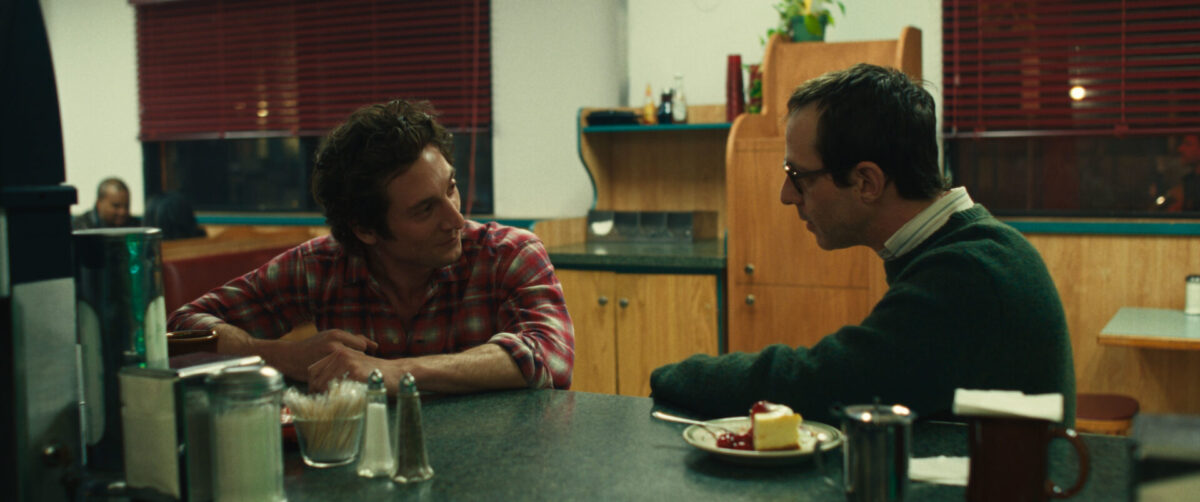
Scott Cooper directs brawny films about headcases with big hearts (Out of the Furnace [2013], Hostiles [2017], The Pale Blue Eye [2022]) and his take on music writer Warren Zane's Deliver Me From Nowhere: The Making of Bruce Springsteen's Nebraska contains those familiar elements wrapped in wonderfully, lyrical moments from a small but important piece of the Boss's life.

In 1981, Springsteen (fighting fit award-winner Jeremy Allen White) is riding the waves of stardom after a string of hit albums. Springsteen is ending a tour with his band in support of the most recent release, The River, and we see them closing a show with Born to Run. This song of rootlessness and rebellion sets the picture's theme, and, it is suggested the nature of the artist's spiritual journey to wholeness.

Springsteen's manager / producer / confidante / guardian angel Jon Landau (the always-welcome award-winner Jeremy Strong) tells The Boss as he sits alone sweating buckets in his dressing room of upcoming promotional and contractual obligations to Columbia Records. Landau, a vitally perceptive person, senses the reclusive Springsteen is showing road-wear. He acquires a rental home for Springsteen away from the city noise where, it is hoped, Springsteen can decompress and begin work on the next record with a trusted engineer (Paul Walter Hauser).

The 30-year-old Springsteen is feeling more that tour fatigue. He is troubled by recurring memories of his childhood and his battling parents, long-suffering Adele and booze-hound Douglas (Gabby Hoffmann and Emmy-winner Stephen Graham of Adolescence). The memories are driving him into dark spaces and he starts to write songs about anger and meanness and entrapment and escape. 

At the same time, he finds some respite in the company of an old schoolmate's sister, Faye (Odessa Young), and they begin a romance that neither Springsteen nor the audience expects to last because of what emerges from his past.

Cooper follows these two complementary tracks and, intriguingly, takes the story of a talented performer with an outsize public profile and delivers an affective study of the emotional costs of the creative process, the pain and elation of seeing reality first fail and then succeed in meeting one's very personal vision. 

Thursday, October 23, 2025

Roofman


Derek Cianfrance hasn't directed a lot of feature pictures, but he has a sure touch with stories about human imperfection.

I loved both The Place Beyond the Pines (2013) and Blue Valentine (2011), two beautifully unsettling films that starred Ryan Gosling, an apparent Cianfrance muse and creative collaborator, in the roles of damaged men making bad decisions and the women who love them.

The director's latest picture, Roofman, stars Channing Tatum in the true story of Jeff, a handsome and charming but emotionally and financially hobbled veteran in North Carolina, whose inability to provide for his family leads him to burglarize McDonald's restaurants after dark.

After a string of thefts, Jeff is caught by the police and imprisoned. He escapes, learns his wife has filed for divorce and forbids him talking to his children. He takes on a new name, and while on the run, finds shelter in the storage space of a Toys R Us in Charlotte.

He holes up for months, monitoring the doings of staff members, especially the prickly store manager Mitch (Peter Dinklage) and the comely single-mother Leigh (Kirsten Dunst), bathing in the restroom, eating nothing but baby food and chocolate candy.

Through a series of events, Jeff meets Leigh at her church, where he tells everyone he's a government agent on a secret assignment in the city. He needs to keep up this lie until he can get help from a former Army buddy Steve (Lakeith Stanfield) and his girlfriend Michelle (Juno Temple of Ted Lasso) to create new papers so that he can move on with his life.

This presents Jeff with a quandary: he's grown attached to Leigh and her daughters (Lily Collias and Kennedy Moyer) and doesn't want to leave them, but he realizes staying would only lead to his being caught. He makes another series of bad decisions that leads to a stand-off with police and draws the curtain down on his charade.

Tatum and Dunst have an easy rapport so their attraction seems authentic, despite the lunacy of this unlikely adventure. Tatum's bucketfuls of charisma make Jeff an appealing but frustrating mix of survival genius and lunkhead. Still, it's a winning combination that will probably ring true for many audience members who have known a few charming liars in their time and maybe dated a few.

Wednesday, October 22, 2025

After the Hunt


To my mind and eye, director Luca Guadagnino's films are beautifully crafted and edgy (A Bigger Splash, Call Me By Your Name, Bones and All, Challengers, Queer) but are frequently undercut by facile treatment of material he wants audiences to seriously engage. His latest picture, After the Hunt, is representative of the celebrated filmmaker's habit of not fully pulling off an ambitious (and worthy) experiment.

Set in the halls and environs of Yale University -- which, interestingly, is most commonly referred to only as "Yale" -- After the Hunt (which might be referring to the baying of wolves in the wake of a successful kill) concerns a group of self-involved academics who revolve around star philosophy professor Alma Imhoff (Julia Roberts). Her nearest satellites are verbose colleague and frenemy Hank Gibson (Andrew Garfield) and her comparatively taciturn acolyte, Ph.D. student Maggie Resnick (Ayo Edebiri).

Alma is plagued by some mysterious illness, but practically glows with entitlement as she is casually intimidating in the classroom and shimmeringly flirtatious at parties she throws with her doting psychoanalyst / gourmet / provocateur husband Frederik (Michael Stuhlbarg), whom she treats with something marginally better than contempt.

Alma is writer Nora Garrett's wonderful portrait of a detached, over-compensated and entitled intellectual, but Garrett and Guadagnino are not as successful with the rest of the complex cast of characters. Hank is both attractive and repugnant, and Maggie, admirable and pathetic. These contradictions add interesting layers to the story, but the jagged pieces of their personalities don't fit together to provide a full picture.

The intrigue at the center of the film is an accusation of sexual assault raised by Maggie against Hank. The student takes the charge to Alma, who resents being drawn into the mess and wonders, despite her ardent public feminism, if the claims are even true. Audiences have seen Maggie's stalkerish behavior and Hank's rakish tendencies, so anything could be true, and watching these truly unlikable people twist in the wind is interesting for a while, but ultimately it's just depressing.

Monday, September 29, 2025

One Battle After Another


The release of a new Paul Thomas Anderson (PTA) feature film is an event for cinephiles because the decidedly quirky and celebrated auteur has a distinctive narrative style and voice in his movies. He writes and directs dense, often broadly satirical or outrageous stories about damaged people trying to recover from, move past, embrace or benefit from the damage, e.g, The Master (2012), Inherent Vice (2014), Punch-Drunk Love (2002).
That is the thrust of his latest feature, One Battle After Another, which I believe will be listed among the very best of PTA's 10 productions, maybe even moving ahead of Magnolia (1999) and There Will Be Blood (2007).
In Battle, an endlessly watchable Leonardo DiCaprio plays "Ghetto" Cat a/k/a Bob, an explosions expert who hooks up with a revolutionary mob in California called the French 75, which is waging war against the U.S. on behalf of victims of exploitation and oppression, among them immigrants in detention camps and cages.
On his first job, Cat / Bob meets at a detention center the spirited and profane Perfidia Beverly Hills (a scalding hot Teyana Taylor) and they begin a romance, of sorts, shortly after Perfidia coerces at gunpoint a dalliance with the center's commander, Steven Lockjaw (a wonderful Sean Penn), to get his "attention" and his goat. (War is hell!)
Some months pass, Perfidia and Bob are a revolutionary power couple in the Southwest underground, and she gives birth to a daughter, whom she resents. Bob takes over childrearing, and Perfidia presses on with the mission of changing the world. Soon, after a botched bank robbery, the French 75's luck runs out, and they are disbursed. Peridia is captured by Lockjaw, who promises relocation if she give up the names and locations of the others. She does and enters witness protection.
After the 75 is dismantled, Lockjaw is recruited by an underground supremacist group that calls itself the Christmas Adventurers (they greet each other by invoking the name of St. Nick and their secret knock is opening two bars to the chorus for Jingle Bells). They recruit him as an agent of racial purification.
Bob and daughter Charlene / Willa (Chase Infiniti) are in hiding, off-the-grid. Bob does little but smoke weed and lay low. When Lockjaw receives word Bob is still kicking, he dispatches his troops and thus begins the series of "battles" between supremacist eradication, governmental cold efficiency and revolutionary soulfulness.
But this is only one variety of battle depicted in PTA's landscape, which was inspired by Thomas Pynchon's Vineland. The political and the familial are also fighting for which is more important, with the clearest answer being, unironically, both and neither.

Tuesday, September 23, 2025

HIM


TV director Justin Tipping "tackles" professional football in a daring and bloody fashion in HIM, his first major feature film that is more surrealism than horror.
Tyriq Walters stars as Cameron Cade, touted as the best college quarterback in the country, as he travels to New Mexico after a brutal, disabling attack to work with the GOAT, Isaiah White, played by Marlon Wayans, the high-powered QB for the San Antonio Saviors
Cade was reared by his father, Cam Sr. (Don Benjamin) to aspire to be the next Isaiah White, and he cannot decline the chance to work into the post, even if his head injury is a recurring concern.
He arrives at White's compound and is greeted with warm affection by White and his wife, Elsie (Julia Fox) but that quickly turns into intimidation and increasing levels of brutality, made bearable by daily injections and transfusions administered by White's personal physician, Marco (Jim Jefferies).
The script by Tipping and writers/producers Skip Bronkie and Zach Akers pulls from a number of cinematic and cultural traditions. Its religious symbolism and references to denial of self and blood sacrifice brought to mind the films of Spanish surrealist Luis Bunuel. It bears more than a passing resemblance to the work of Jordan Peele, one of the picture's producers.
Though both Wayans and Walters deliver tireless performances (Walters more than Wayans), the story's trajectory feels uncertain, the messaging is muddy and seems to be mostly about the deceptive qualities of ambition than anything else. That is a rich concept to explore, and I hope Tipping gives it another shot.
I suspect HIM will find a cult audience drawn to the movie's physicality, sexual tensions and treatment of sacred cows.

Friday, September 19, 2025

The Long Walk


Stephen King is 77, and he was in his early 30s when he published The Long Walk under the pen name Richard Bachman in 1979. That was way before the current political darkness and threat of social upheaval, but its story fits like a glove.

Francis Lawrence, director of the Hunger Games series, has given masterful shape to King's dystopian tale of teenage boys representing the 50 states in a "walk or die" competition for great wealth and the granting of a single wish to the lone survivor.

The screenplay by King and J.T. Mollner focuses on a dozen or so of the boys, with the friendship between Ray (Cooper Hoffman, son of the late Philip Seymour Hoffman) and Peter (David Jonsson of Alien: Romulus) being the engine behind this grueling and often devastating machine.

The 50 boys, chosen by lottery, gather on a remote Midwestern road, where armed soldiers under the command of The Major (Mark Hamill) wait to escort them on the 300-mile trek. Like competitors in a high school marathon, the boys talk trash to one another, and through this sparring we get to know a bit about each of them, just enough to get us to invest in their fates.

The film's power -- and don't mistake, it is substantial -- lies in what these widely diverse boys reveal about themselves, things that transcend their nightmare world and land squarely in the audience's lap -- and on their hearts.

I put off seeing The Long Walk because I thought its narrative of desperation and death would be too much ... and it nearly is. But it is kept from being unbearably depressing through the performances by Hoffman and Jonsson, mainly. All of the young actors are wonderful.

The bond that Ray and Peter develop, the energy that radiates from their devotion, lifts not only the other boys but the audience as well. It is heartening to see selflessness and sacrifice given such life at a time when it would be far too easy to think we had lost them somewhere down the road.

Downtown Abbey: The Grand Finale


British director Simon Curtis rings down the curtain on the venerable historical drama Downton Abbey with a mix of wistfulness and celebration as one generation passes the torch, reluctantly at first, to their successors. Even for one who has not seen a single episode of this show, the story struck notes of warmth and resilience ... much needed these days.

Set during the time of the great market crash at the end of the '20s, "The Grand Finale" opens with a wonderful tracking shot into a London theater where Noel Coward's Bitter Sweet is being performed, its most enduring number -- I'll See You Again -- being reprised at the close of the last act. The camera pans over the audience -- the peers and aristocrats in their boxes, the commoners in the balcony. All in keeping with British tradition.

In the first few minutes, we are (re)introduced to the main players in Downton's world of class and privilege -- principally Mary Talbot (Michelle Dockery), the elder daughter of Lord and Lady Grantham (Hugh Bonneville and Elizabeth McGovern), the master and mistress of the eponymous estate outside of London, a large property that is struggling financially. Mary, a sharp and decisive woman, is heir apparent to the Grantham legacy but is facing her own personal challenges.

News of Lady Mary's divorce hits the London papers, and she becomes a social pariah, invitations to Grantham parties are declined. Other intrigues unfold as Lady Grantham, American born, welcomes her luckless brother (Paul Giamatti) from the States with troubling news about their family's fortune. He is accompanied by an oily friend, Sambrook (Alessandro Nivola), who has been managing the family's accounts, and who presses the wounded Lady Mary into an intimate encounter.

That is a broad outline of the "upstairs" happenings. Changes are also underway "downstairs," in the kitchen and servants' quarters, where the veterans are preparing to take their leave and retire to what is presumed to be a life of well-earned ease. Mrs. Patmore (Lesley Nicol) is leaving the kitchen in the hands of Daisy Parker (Sophie McShera), a young woman she's thought of as a daughter. Jim Carter's Mr. Carson, the senior butler at Downton, is having a bit more difficulty loosening his grip on a post he's held for decades, but his successor Andy Parker, husband to Daisy, shows great deference and forbearance, even as news of the uncertainty about the house's future filters from above.

The film is about the rigidity of class differences in England, but, I think, it is also about how porous those distinctions were becoming. The relationship between Mary and her maid Anna Bates (Joanne Froggat) is one of the richest and more complex. Mary's reliance on the other woman's support and discretion represents the upper class's long-standing (eternal?) dependence on the working class to give their lives form and structure, recognizing (though not verbally expressing) their deep incapability. This is reflected most pithily in a brief exchange when Grantham tells Carson to tie his bowtie for him as he prepares for a public appearance to which the butler is not invited. (Though I spotted only one person of color in the entire picture, the film's message easily translates to America's history with race and class.)

Grace notes on this theme are added when the trio of actor Guy Dexter (Dominic West), his companion and former Downton servant Thomas Barrow (Robert James-Colllier), and Coward (Arty Froushan) are invited to a Grantham affair where all manner of social convention are teased and in the end capsulized by Coward's performance of Poor Little Rich Girl for Lady Mary and the other guests.

At the time, it would have been a huge "FU" to those who were in a twist about propriety and status, and it has a savory deliciousness even today.

Saturday, September 6, 2025

Fantastic Four: First Steps


Marvel's comic series about four science explorers genetically altered by radiation during a cosmic event is nearly as enigmatic as the X-Men series.

Veteran TV director Matt Shakman's The Fantastic Four: First Steps plays with the comic book's classic puzzlement about differentness and duty and adds in family drama in this story of heroes in an anachronistic '60s world responding to a seemingly invincible existential threat.

Led by the ubiquitous Pedro Pascal as rubberized Reed Richards / Mr. Fantastic, the amiable quartet -- Sue Storm / Invisible Woman (Vanessa Kirby), Ben Grimm / The Thing (The Bear's Eben Moss-Bachrach) and Johnny Storm / Human Torch (Joseph Quinn) -- are media darlings, making regular appearances on television and basking in their hard-earned celebrity. They're an international brand on what is an alternative version of Earth that mixes '60s cultural artifacts with futuristic robotics and aeronautics. (MCU once again tapping the parallel multiverse theme.)

When a silver-coated herald on a surfboard (Ozark's Julia Garner), arrives and announces Galactus, The Devourer (Ralph Ineson) is on his way to gobble up the planet and all of its inhabitants, the Four, including a very pregnant Sue, spring into action.

Shakman and his screenwriters choose not to stage a half-dozen or more loud and long battles between good and evil (I think this was a wise decision, considering the ragtag assortment of superpowers the Four present). Instead, and refreshingly, the movie spends much more time on "science" and "science-y things" and problem-solving, using brains to confront a powerful opponent whose appetite makes him myopic and a bit addled. (One is free to make whatever real-world comparisons one wishes.)

In many ways, First Steps includes familiar elements of Marvel's winning formula -- attractive stars, menacing villain(s) and the punchy kind of banter that fans expect. In addition, and I believe this is a first, the movie gets a valuable assist from an infant who, depending on the ambitions of the MCU brain trust, might be the "herald" of a brand-new generation of bombastic heroics, which, in turn, suggests this franchise might be interminable.

Friday, September 5, 2025

The Roses


Film and television director Jay Roach is a master of calamitous comedy that snarls, slobbers and snaps but is nonetheless delightfully entertaining to those of us who savor bashing battles royale -- Austin Powers, Fockers, Bombshell.

His broadly outrageous remake of 1989's The War of the Roses (Kathleen Turner and Michael Douglas) has been whittled down to just The Roses but has not dropped "the war." In fact, Roach expands the battlefield, amps up the emotional and material destruction and spreads the dysfunction of the central pairing -- icy Ivy and theatrical Theo (Olivia Colman and Benedict Cumberbatch, respectively) -- to their closest associates and friends, each more callous and self-involved than the one before.

Roach serves up a banquet of withholding resentment as Ivy's career as a California celebrity chef rockets and Theo's as a visionary architect crashes to earth, literally. Theo, an unemployable pariah consumed by passive aggression, turns their children into fitness weapons of destruction after Ivy's years of fatty indulgence. It's this dynamic that offers the freshest grace notes to the spirited rancor of domestic intranquility. The airport scene where they send the kids (Hala Finley and Wells Rappaport) off to a sports school in Miami says so much about this family and the connective tissue that they lack.

Unhappiness continues to mount, divorce proceedings are initiated, weapons drawn and the fiery ending, well, inevitable. It's a blast!

Caught Stealing and Relay


Darren Aronofsky and David Mackenzie are competing for Best New York chase film currently playing in the cineplexes.

Aronofsky (The Whale, Black Swan, Requiem for a Dream) is offering an unhinged rock-em sock-em that gives a nod to Martin Scorsese's feverish nightmare in Lower Manhattan, After Hours (1985). In fact, the star of that little-known gem, Griffin Dunne, is a featured player in Aronofsky's latest film, Caught Stealing, which stars Hollywood It Boy Austin Butler as hunky Hank, a battered California baseball player living in Alphabet City a decade before the Twin Towers fell.

Hank is dating a foxy EMT named Yvonne, played by Zoe Kravitz, and is generally hail-fellow-well-met to the down-but-not-out denizens of his hardscrabble neighborhood, including the spiky Brit punker next door named Russ (a sporty Matt Smith of Dr. Who and The Crown).

Russ leaves his beloved feline companion, Buddy, in Hank's care so that Russ might visit his ailing father in London. While away, Russ's flat is visited by Russian bruisers who after being confronted bash Hank, believing he is Russ's cohort in a criminal enterprise. They think he knows the location of a large payout Russ owes them.

A police detective (Regina King) tells Hank that Russ is involved with several groups of mobsters that the police have been monitoring. They need Hank's help shutting the mobs down. Hank's reluctant involvement pulls him into dark waters where he and everyone around him, including Buddy, are targets. He spends most of the movie trying to avoid capture.

The film is described as a dark comedy -- the darkness being the body count and the comedic elements being Hank's preposterous predicament. It mostly works, banking on Butler's cheekbones and chiseled abs.

Directed by David Mackenzie (Hell or High Water), Relay stars Riz Ahmed as an anonymous fixer who goes by the name of Tom. He's part of an organization in New York that parlays deals between whistleblowers and the companies they're prepared to drop a dime on.

Lily James plays Sarah, a biochemical researcher who has documentation that a product about to be released by her former company carries dangerous side-effects for some humans who come in contact with it. She was prepared to go public with her findings but has changed her mind because of the threats she's received.

She wants out, and Tom arranges through an untraceable communication network to coordinate the exchange, secure Sarah's safety and get the company to pay the intermediary $500,000 for making it happen.

Of course, it doesn't happen as planned. Sam Worthington's Dawson and his team try to subvert Tom's plan by intercepting messages so that they might retrieve what was taken and silence Sarah. Tom stays a few steps ahead of Dawson's crew as they crisscross New York City, until forced to improvise by unforeseen complications and turnabouts that some audience members might view as a bridge or two too far in credibility.

Still, Ahmed has an impactful demeanor as he hoofs through the congested alleyways of The Big Apple like a half-back.

Though set in different decades, Caught Stealing and Relay are commenting -- in different ways -- on public and private distrust, heroic loneliness and the elusiveness of enduring happiness.

Thursday, August 21, 2025

The Naked Gun (2025)


Those familiar with SNL alum/writer/actor/director Akiva Schaffer's humor will be better prepared than the uninitiated for his revival of a 30+-year-old franchise that many probably assumed was dead.
With a bit of Hollywood magic -- and the deep, deep pockets of a dozen producers, including Schaffer and king of animated serials Seth MacFarlane -- The Naked Gun is back, locked and loaded and delivering about 80 minutes of giggles, guffaws and gags for those game enough to take it on.
Leslie Nielsen was the original inept detective Frank Drebin back in the '80s and '90s, and in the fourth installment Liam Neeson is his equally inept son, Frank Jr., who is, without authorization, tracking a tech genius (Danny Huston) who has a cockamamie plan for world domination (or something) using a device brilliantly labeled in the first minutes of the film as "p.l.o.t. device."
Drebin is joined in the investigation by his partner, son of the original Ed Hocken (George Kennedy), Ed Jr., an always-winning Paul Walter Hauser, and grieving widow Beth Davenport, played by Pamela Anderson. (The Neeson and Anderson romance has kept Tinseltown beat writers busy for the past few months.)
The picture's dialogue is twisted and the sight gags are fast and furious -- or maybe that should be "the dialogue is fast and furious and the sight gags are twisted." In either it's a wonderful distraction from, but as I told the theater manager who asked me what I thought of the picture, "You can't drift off or you'll miss something."

Tuesday, August 19, 2025

Nobody 2


Indonesian action director Timo Tjahjanto moves 2021's bone-crusher Nobody a few steps forward in "2" as Bob Odenkirk's hilariously doleful but lethal fixer Hutch Mansell takes his long-suffering wife Becca (Connie Nielsen) and surly and increasingly indifferent kids Brady and Sammy (Gage Munroe and Paisley Cadorath) on vacation to an amusement park from his childhood, Plummerville -- his only pleasant memory about being reared by his father, David (Christopher Lloyd), who comes along.

While on holiday, Hutch discovers an elaborate criminal enterprise managed by the sheriff (Colin Hanks) with the cooperation of the park's owner (John Ortiz), who much pay off a debt amassed by his father, the original owner. Hutch is warned by his handler (Colin Salmon) not to interfere in the operation because it's run by the ruthless Lendina (Sharon Stone), whose "scorched-earth" approach to vengeance is legend in the underground.

But Hutch being Hutch, he can't avoid acting on instinct when his kids are disrespected in the arcade. He puts half of the sheriff's henchmen in the hospital and draws down the wrath of Lendina for a ridiculously elaborate showdown on the midway. Adopted-brother Harry (RZA), who was mostly off-camera in the first film, knows the hammer is about to fall and mounts up to join Hutch and the others for the fireworks.

This series -- which owes much to the highly lucrative and addictive John Wick franchise -- is generally light on narrative and heavy on mayhem, but Odenkirk is as engaging a performer as one is likely to find, and so Nobody 2 goes down easily as a summertime outing.

It's like a waterslide that's good for at least one go on a hot afternoon.

Saturday, August 16, 2025

Highest 2 Lowest II


Spike Lee's latest film Highest 2 Lowest poses an interesting moral quandary for its lead character -- music mogul David King (Denzel Washington) -- but leaves the audience with an unclear message.
King is trying to save his company from being bought by an aggressive competitor when word comes that his son has been kidnapped and is being held for ransom. When police discover the kidnapped boy is not King's son, Trey, but the son of King's driver, he is relieved that he'll be able to hold onto the 17.5 million dollar ransom.
Those around him are stunned by his coldness, and his driver (Jeffrey Wright) is tossed by feelings of confusion and disrespect, not just from King, but from the police who seem to value his son's life less.
A series of counter-arguments from those in King's circle disrupts his resolve. A business partner asks him about the optics if he refuses to pay and the boy is harmed or killed. King responds that the public's memory is short and the fallout would pass.
His son presses him to pay the money for his friend, who is like a brother to him, using language regularly heard on the hip-hop recordings King has made millions producing and promoting. King responds by threatening to beat his son for disrespecting him.
It will surprise no one that the hero eventually relents and agrees to deliver the ransom -- with assurances from the police that they will retrieve the money and capture the kidnapper. But the plan does not lighten his burden, which he and his driver, a former convict, later handle in street fashion, more or less.
Lee's film, an adaptation of Akira Kurosawa's 1963 classic High and Low, toys with Shakespearean themes of hubris, greed and distrust, but, rather disappointingly, offers a conclusion that leaves the hero mostly whole -- even though those around him have been damaged -- bodily and spiritually.
Why was this choice made? What were Lee and screenwriter Alan Fox trying to say as they modified the original ending, which was a meeting between the extorted businessman and the envious kidnapper, to include a coda that assured viewers all would be well for the Kings.
Were they trying to anticipate audience pushback if the hero was indeed left at his lowest point, as the title suggested?
Did they imagine audiences would be forgiving of a man who, despite attributing his actions to divine guidance, demonstrated repeatedly through word and deed that he was moved almost exclusively by material gain?
Maybe Lee and Fox placed the real message in the last scene between King and his driver, who was recovering in a hospital from injuries. The driver says he won't be working for King anymore and hoped to move on with his son. King said he understood, and the two parted with a dap and a homie sign-off, but the look on the driver's face suggested it wasn't just physical injuries he suffered on behalf of the King who had, if just briefly, set himself above his friend.
Now there is something to think about!

Highest 2 Lowest


Spike Lee's latest joint is a tribute to both the Japanese master filmmaker Akira Kurosawa (1910-1998) and to Lee's frequent collaborator Denzel Washington; they've done five movies together.

Highest 2 Lowest is a reworking of Kurosawa's 1963 crime story High and Low, in which a high-powered business executive's plans to buy control of his company are disrupted when the son of his driver is mistakenly kidnapped by extortionists hoping to ransom the executive's son. 

Lee moves the story to his beloved New York -- the stunning opening cityscape is cleverly and ironically set against the background of Norm Lewis's Oh, What a Beautiful Morning! from Oklahoma. Washington plays a legendary music impresario and producer named David King (Lee has a way with on-the-nose character names) sitting on top of the world in his high-rise penthouse, with his impossibly glamorous wife, Pam, played by Ilfenesh Hadera, and their dutiful 17-year-old son, Trey (Aubrey Joseph). King's trusted companion is his driver Paul (an always-welcome Jeffrey Wright), whose son Kyle (Wright's son Elijah) is the younger King's doppelganger and best friend.

King has borrowed heavily to counter an offer to purchase his recording empire, Stacking Hits, from an aggressive across-the-river competitor and is ready to make the announcement to his board when he receives a call that his son has been kidnapped and the ransom is $17.5 million in Swiss currency. 

King decides to redirect the money he's gathered for the purchase to the ransom, but when the police discover the kidnappers have the wrong boy, he finds himself on the horns of a dilemma. Pay the ransom and lose his business or buy the business and condemn the boy to death. 

Nearly all of the film's emotional tension comes in the exchanges between King and Paul, which reveals the rich social layering Alan Fox's screenplay builds into a story that in other places suffers from troubling narrative holes, continuity glitches and lapses in logic. 

As a Spike Lee production, music factors heavily into building characters and spaces, and Lee has never been afraid to devote running time to sound and color. This picture includes a wonderful performance by Eddie Palmieri and the Salsa Orchestra, an extended number by rap star and featured player A$AP Rocky and stirring closing ballad by British singer Aiyana-Lee. 

But, as it ever was, this is Denzel Washington's showpiece and covers lots of dramatic turf in depicting a man who has been sure about nearly everything in life, now facing financial and spiritual uncertainty.

Wednesday, August 13, 2025

Together


One could understate the central premise of Aussie writer/ director / visual effects artist Michael Shanks' debut feature film Together as the story of a young-ish couple with commitment issues.

Tim (Dave Franco) and Millie (Alison Brie) have been dating for a decade with little forward momentum. Some of this is attributed to Tim's horrifying discovery of his whacked-out mother in bed with his long dead father's putrefying corpse.

Millie, who barely contains her frustration with her "boy partner," decides to take a job as a teacher in a remote elementary school. (It's not clear if we're in Shanks' native Australia or some other locale.) Tim, a musician with limited prospects, agrees to come along. To Franco's credit, Tim's diffidence is palpable to the audience. That and Millie's sharply pointed barbs make these static millennials as annoying as their real-world counterparts.

But both Millie and Tim grow out of their initial pitiable self-involvement as they begin to experience unusual attraction to one another, after falling into a subterranean cavern that contains vestiges of a cult that practiced weird bonding ceremonies, according to Millie's oily school principal (David Herriman).

Franco and Brie give their all to Shanks' evolving grotesqueries, flinging about and contorting themselves as the ties that bind grow tighter and Millie and Tim get over their nagging, bloody commitment issues.

Friday, July 25, 2025

Eddington


Ari Aster has written and directed four feature-length films -- Hereditary, Midsommer, Beau is Afraid and his latest, Eddington.

To say Aster has a singular narrative voice is to oversimplify the, well, oddness of his cinematic vision. That's not to say his pictures are bad. It's more a case of being -- as is true of many other pictures by film auteurs -- uncompromisingly complex and not altogether clear in messaging and intent. None of Aster's four pictures -- at least to my mind -- is cheery. Aster doesn't do cheer, even though he has trenchant wit and unnatural attraction to tragic irony.

Eddington takes place in a small, dusty New Mexico town of a few thousand people, who represent to a great degree the diversity of modern America, especially its warriors and whack jobs.

As the picture opens, it is May 2020, and the residents of Eddington are squabbling about masking against Covid-19. Mayor Ted Garcia, an always-welcome Pedro Pascal, is complying with the governor's orders for masking in public as he works with the council to secure a new tech plant that could possibly bring ecological problems to the town which borders a Native American reservation.

Town Sheriff Joe Cross (Aster alum and apparent muse Joaquin Phoenix) opposes the masking measure and refuses to enforce the law that the mayor insists will keep citizens alive. This tete-a-tete leads to the weaving of a dozen or so other social and political issues into this tale of what is ostensibly a private dispute between two old adversaries. (The reason for the bad blood is revealed in the second half of the picture.) And this beef eventually leads to a showdown, but certainly nothing like any ever staged in a Western before.

At this time, protests in response to the Gerald Floyd killing have sprung up around the country. TV and social media are blazing with news footage, attacks and appeals, and even citizens of Eddington get into the mix. Public demonstrations and violence shake some Eddington residents and inspire others to want to stick it to the man.

At home, Cross is dealing with his emotionally fragile and unavailable wife, Louise (Emma Stone), and her conspiracy-addicted mother, Dawn (Deidre O'Connell). Slowly he gets drawn into their paranoia, which, in the end, turns out not to be too far off base.

Aster continues to display a unique genius and fills Eddington with winks-and-nods -- maybe a few too many for lazy audiences to fully register. The picture has a raw assurance that will surely please Aster fans even though it may not win him very many new ones. 

Saturday, July 19, 2025

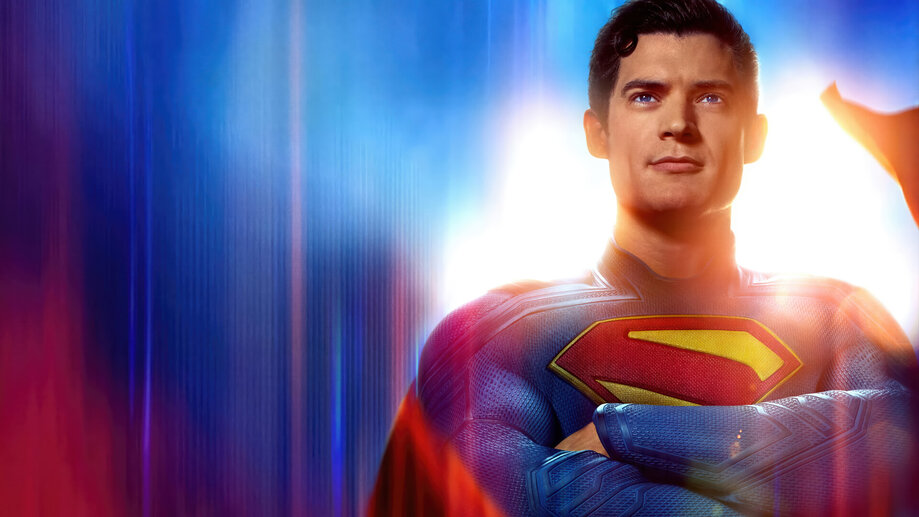
Superman (2025)

 https://img.uhdpaper.com/wallpaper/superman-2025-movie-david-corenswet-749@5@g

James Gunn's supercharged Superman will make a gazillion dollars for the DC Cinematic Universe by offering the diehard and ever-faithful a rejuvenatingly broad mix of action and comedy, heroics and villainy, a tiny bit of romance between the Man of Steel (David Corenswet) and the intrepid reporter Lois Lane (Rachel Brosnahan) and an incorrigible flying dog.
The redoubtable Nicholas Hoult chews scenery as Lex Luthor, the alopeciated brains behind a military-industrial-complex-machine that is creating super soldiers that he hopes to sell to the U.S. for future battles with "metahumans," the most prominent being his archenemy Superman.
Other intrigues lie beneath the surface of this lunacy, but not for long as battles between good and evil take on increasing levels and dimensions of strangeness. It's all great fun, with guffaws mixed in with the earth-shattering punches.
Gunn has referred to Superman as an immigrant, which has riled some folks who, apparently, don't want politics mixed in with their comic book lore.
I suppose we should not show them the famous picture of George Reeves as Superman from the television series of the '50s, posed in front of the American flag.


Adolescence, Episode 3


Episode 3 of Netflix's Emmy-nominated miniseries Adolescence is essentially a two-player one-act that features Erin Doherty as psychologist Briony Ariston and young Owen Cooper as accused murderer Jamie Miller. Both Doherty and Cooper are nominated for their performances, which are, to use that criminally overused expression, "amazing."

The series features wonderful writing, direction and camerawork and is the story of the investigation into the death of a local school girl. A young classmate is arrested on charges of having followed her and stabbed her to death after a brief argument. Police used CCTV footage to identify the suspect, who is detained and examined by psychologists to determine his mental capacity, that is, what does he "understand."

For most of the episode, the psychologist and the boy sit across from each other at a table. She begins the session brightly, and the boy seems cooperative but when talk turns to definitions of manhood, the temperature in the room spikes, then ebbs, then spikes again, even as the space between the two characters gets tighter.

Jamie, clearly emotionally unstable because of the bullying he's suffered at school and on Instagram, grows increasing threatening and Briony steels herself against the tirade, holding fast to her professionalism while feeling enormous unexpressed pity for the child. The last five minutes in the episode are riveting and devastating .... and heartbreaking.

What a ride!


Saturday, July 5, 2025

Trap

 https://static1.colliderimages.com/wordpress/wp-content/uploads/2024/07/trap-josh-hartnett-ariel-donoghue.jpg

M. Night Shyamalan's latest thriller, Trap, is mind-bending poser like his previous pictures but not in the same way.
The biggest question this film poses is "What kind of movie was it meant to be?"
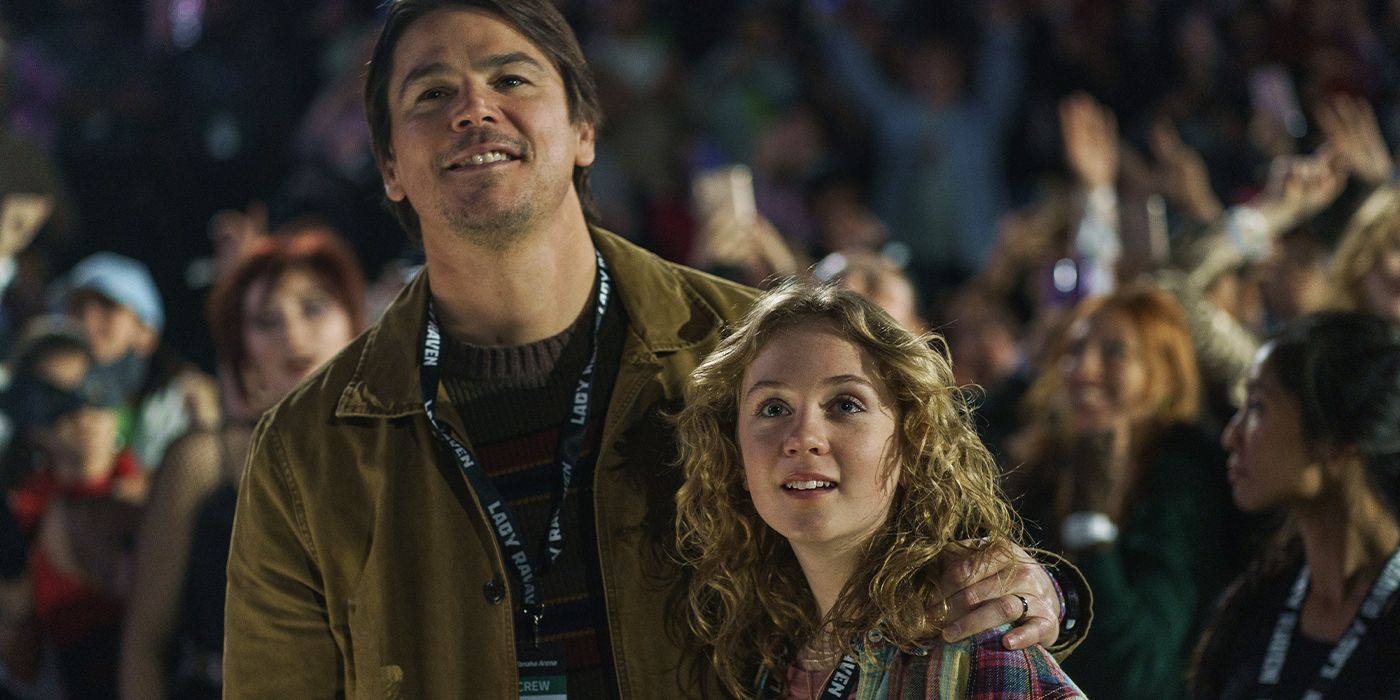
Trap -- which stars Josh Hartnett, Ariel Donoghue, Shyamalan's daughter Saleka, and, inexplicably, Hayley Mills -- is set in Shyamalan's favorite location city, Philadelphia, during a Gen Z concert by superstar Lady Raven (Saleka).
Hartnett plays doting Dad and firefighter Cooper who takes daughter Riley (Donoghue) to the concert as a reward for outstanding work in the classroom. When Cooper sees the arena is overflowing with police and FBI he asks a concert merch vendor (a nice turn by Jonathan Langdon) and is told law enforcement received a tip the serial killer called The Butcher will be at the show.
The audience will discover pretty quickly that Hartnett is the suspect (though the movie never shows Cooper actually butchering anyone). The first two-thirds of the film is Cooper trying to evade the clutches of FBI profiler Dr. Grant (Mills) while not raising his fangirl-daughter's suspicions.
A master fabricator with an ingratiating smile, Cooper nearly pulls it off with some implausible scheming involving a gullible concert usher (Shyamalan in his obligatory cameo) and Lady Raven, herself.
The last act, which introduces Cooper's wife and Riley's mother Rachel (Alison Pill), is where Shyamalan's exposition goes off the rails and the narrative action becomes inert. In fact, what action there was happened mostly on the concert stage where Saleka (who wrote and performed original music in the film) holds court.
Overall, Shyamalan's script is weak in tension and emotional cohesion and clarity. Are we supposed to pull for the handsome Father of the Year who dismembered a dozen people or pray that the Swat team stomps him into the ground? Is Shyamalan's story about sociopathy, societal breakdown, parental dysfunction or the hidden perils of teen pop?
Some might say it doesn't matter, but I couldn't stop wondering which kind of picture I was watching, and that puzzlement made the talk and mugging on the screen a real distraction.


Friday, July 4, 2025

F1: The Movie


In traditional Hollywood terms, director Joseph Kosinki's $200 million racing baby, F1: The Movie, is a sure winner.
With the epic cinematic wattage of both star Brad Pitt and charismatic "It Boy" Damson Idris, a solid script with a trusted and familiar arc, and thrilling racing footage that is hypnotic and dramatic, F1 is destined to be a crowd-pleaser that will easily recoup the money poured into this sprawling, globe-trotting production.
Pitt plays Sonny Hayes, a skilled itinerant racer who abandoned the circuit about 30 years before we meet him. A former team member / now team owner Ruben Cervantes (Javier Bardem) offers Sonny, who was prodigious in his 20's but is now living in a van, an opportunity to drive regularly for him and, perhaps, rekindle his youthful fire. Sonny responds with hesitation but agrees to help his old friend dig himself out of a financial pit by putting some wins on the board.
Sonny, now 60, partners with Idris' Joshua Pearce, a young and gifted driver who is not looking to be mentored by a "never was." The early interactions between the two is what we would expect in the world of motorsport, and the slow melting of the ice between them is the heart of the picture.
Kosinki puts all of the pieces in place -- including a potential romance with chief car designer Kate (the wonderful Kerry Condon of The Banshees of Inisherin) and lets the picture's swift pace carry viewers along, delivering the goods in the movie's inevitable standoff with one of the picture's producers, British F1 driver Lewis Hamilton, whose face appears on camera only briefly.
It is to Kosinski's credit that the film doesn't wander too far off the track -- even though a few cars do in several heart-stopping scenes -- so we never lose sight of the intensity of Sonny's quest for ... well, that's not entirely clear, but one thing we know, it's not about "the money."

Sunday, June 22, 2025

28 Years Later

 P


Oscar-winner Danny Boyle returns to the director's chair for the third installment in the "28" series about the walking un-dead, which began more than 20 years ago. The second film in 2007, which was a worthy sequel, was directed by Juan Carlos Fresnadillo.

Boyle knows well how to match the visceral with the cerebral, and this continuing story of a viral catastrophe that has wiped out most of human life in the British Isles offers audiences bucketfuls of blood and gore but also the biggest of beating hearts at its center.

On an isolated Scottish island that has been converted into a fortress against the ravenous zombie hordes on the mainland, Jamie (Aaron Taylor-Johnson) takes his young son, Spike (Alfie Williams giving a nicely assured performance), across the channel so that the boy might kill his first infected resident with bow and arrow. They left ailing, delusional mother Isla (Jodie Cromer) in the care of a neighbor.

As one might expect, the expedition is dreadful and the lad only successful is making one kill, his tenderness getting the best of him. While hiding from the pursuers in an empty loft, young Spike sees a fire burning in the distance and wonders about its source. After narrowly escaping a swift and determined alpha male, the boy learns from another man in the compound that the fire is quite likely tended by a mad physician who has lived on the mainland for decades.

After seeing his father keeping company with another woman, Spike decides to sneak his mother out of the encampment, across the channel and to the doctor, who he hopes can determine what is wrong with her and make her better. 

Their journey is not without peril, and Boyle masterfully ratchets up the tension while simultaneously putting essential meat on the bones of the relationship between the boy and his mother.

Fans are undoubtedly curious if 28 Years Later will be the end of the run. The final five minutes of the picture strongly suggest much more is in the wings, waiting to spring out on audiences.


Digger

  Alejandro G. Iñárritu's pitch-black, politically-bombastic Digger has so much structural and narrative depth that it will challenge ev...