Thursday, August 21, 2025

The Naked Gun (2025)


Those familiar with SNL alum/writer/actor/director Akiva Schaffer's humor will be better prepared than the uninitiated for his revival of a 30+-year-old franchise that many probably assumed was dead.
With a bit of Hollywood magic -- and the deep, deep pockets of a dozen producers, including Schaffer and king of animated serials Seth MacFarlane -- The Naked Gun is back, locked and loaded and delivering about 80 minutes of giggles, guffaws and gags for those game enough to take it on.
Leslie Nielsen was the original inept detective Frank Drebin back in the '80s and '90s, and in the fourth installment Liam Neeson is his equally inept son, Frank Jr., who is, without authorization, tracking a tech genius (Danny Huston) who has a cockamamie plan for world domination (or something) using a device brilliantly labeled in the first minutes of the film as "p.l.o.t. device."
Drebin is joined in the investigation by his partner, son of the original Ed Hocken (George Kennedy), Ed Jr., an always-winning Paul Walter Hauser, and grieving widow Beth Davenport, played by Pamela Anderson. (The Neeson and Anderson romance has kept Tinseltown beat writers busy for the past few months.)
The picture's dialogue is twisted and the sight gags are fast and furious -- or maybe that should be "the dialogue is fast and furious and the sight gags are twisted." In either it's a wonderful distraction from, but as I told the theater manager who asked me what I thought of the picture, "You can't drift off or you'll miss something."

Tuesday, August 19, 2025

Nobody 2


Indonesian action director Timo Tjahjanto moves 2021's bone-crusher Nobody a few steps forward in "2" as Bob Odenkirk's hilariously doleful but lethal fixer Hutch Mansell takes his long-suffering wife Becca (Connie Nielsen) and surly and increasingly indifferent kids Brady and Sammy (Gage Munroe and Paisley Cadorath) on vacation to an amusement park from his childhood, Plummerville -- his only pleasant memory about being reared by his father, David (Christopher Lloyd), who comes along.

While on holiday, Hutch discovers an elaborate criminal enterprise managed by the sheriff (Colin Hanks) with the cooperation of the park's owner (John Ortiz), who much pay off a debt amassed by his father, the original owner. Hutch is warned by his handler (Colin Salmon) not to interfere in the operation because it's run by the ruthless Lendina (Sharon Stone), whose "scorched-earth" approach to vengeance is legend in the underground.

But Hutch being Hutch, he can't avoid acting on instinct when his kids are disrespected in the arcade. He puts half of the sheriff's henchmen in the hospital and draws down the wrath of Lendina for a ridiculously elaborate showdown on the midway. Adopted-brother Harry (RZA), who was mostly off-camera in the first film, knows the hammer is about to fall and mounts up to join Hutch and the others for the fireworks.

This series -- which owes much to the highly lucrative and addictive John Wick franchise -- is generally light on narrative and heavy on mayhem, but Odenkirk is as engaging a performer as one is likely to find, and so Nobody 2 goes down easily as a summertime outing.

It's like a waterslide that's good for at least one go on a hot afternoon.

Saturday, August 16, 2025

Highest 2 Lowest II


Spike Lee's latest film Highest 2 Lowest poses an interesting moral quandary for its lead character -- music mogul David King (Denzel Washington) -- but leaves the audience with an unclear message.
King is trying to save his company from being bought by an aggressive competitor when word comes that his son has been kidnapped and is being held for ransom. When police discover the kidnapped boy is not King's son, Trey, but the son of King's driver, he is relieved that he'll be able to hold onto the 17.5 million dollar ransom.
Those around him are stunned by his coldness, and his driver (Jeffrey Wright) is tossed by feelings of confusion and disrespect, not just from King, but from the police who seem to value his son's life less.
A series of counter-arguments from those in King's circle disrupts his resolve. A business partner asks him about the optics if he refuses to pay and the boy is harmed or killed. King responds that the public's memory is short and the fallout would pass.
His son presses him to pay the money for his friend, who is like a brother to him, using language regularly heard on the hip-hop recordings King has made millions producing and promoting. King responds by threatening to beat his son for disrespecting him.
It will surprise no one that the hero eventually relents and agrees to deliver the ransom -- with assurances from the police that they will retrieve the money and capture the kidnapper. But the plan does not lighten his burden, which he and his driver, a former convict, later handle in street fashion, more or less.
Lee's film, an adaptation of Akira Kurosawa's 1963 classic High and Low, toys with Shakespearean themes of hubris, greed and distrust, but, rather disappointingly, offers a conclusion that leaves the hero mostly whole -- even though those around him have been damaged -- bodily and spiritually.
Why was this choice made? What were Lee and screenwriter Alan Fox trying to say as they modified the original ending, which was a meeting between the extorted businessman and the envious kidnapper, to include a coda that assured viewers all would be well for the Kings.
Were they trying to anticipate audience pushback if the hero was indeed left at his lowest point, as the title suggested?
Did they imagine audiences would be forgiving of a man who, despite attributing his actions to divine guidance, demonstrated repeatedly through word and deed that he was moved almost exclusively by material gain?
Maybe Lee and Fox placed the real message in the last scene between King and his driver, who was recovering in a hospital from injuries. The driver says he won't be working for King anymore and hoped to move on with his son. King said he understood, and the two parted with a dap and a homie sign-off, but the look on the driver's face suggested it wasn't just physical injuries he suffered on behalf of the King who had, if just briefly, set himself above his friend.
Now there is something to think about!

Highest 2 Lowest


Spike Lee's latest joint is a tribute to both the Japanese master filmmaker Akira Kurosawa (1910-1998) and to Lee's frequent collaborator Denzel Washington; they've done five movies together.

Highest 2 Lowest is a reworking of Kurosawa's 1963 crime story High and Low, in which a high-powered business executive's plans to buy control of his company are disrupted when the son of his driver is mistakenly kidnapped by extortionists hoping to ransom the executive's son. 

Lee moves the story to his beloved New York -- the stunning opening cityscape is cleverly and ironically set against the background of Norm Lewis's Oh, What a Beautiful Morning! from Oklahoma. Washington plays a legendary music impresario and producer named David King (Lee has a way with on-the-nose character names) sitting on top of the world in his high-rise penthouse, with his impossibly glamorous wife, Pam, played by Ilfenesh Hadera, and their dutiful 17-year-old son, Trey (Aubrey Joseph). King's trusted companion is his driver Paul (an always-welcome Jeffrey Wright), whose son Kyle (Wright's son Elijah) is the younger King's doppelganger and best friend.

King has borrowed heavily to counter an offer to purchase his recording empire, Stacking Hits, from an aggressive across-the-river competitor and is ready to make the announcement to his board when he receives a call that his son has been kidnapped and the ransom is $17.5 million in Swiss currency. 

King decides to redirect the money he's gathered for the purchase to the ransom, but when the police discover the kidnappers have the wrong boy, he finds himself on the horns of a dilemma. Pay the ransom and lose his business or buy the business and condemn the boy to death. 

Nearly all of the film's emotional tension comes in the exchanges between King and Paul, which reveals the rich social layering Alan Fox's screenplay builds into a story that in other places suffers from troubling narrative holes, continuity glitches and lapses in logic. 

As a Spike Lee production, music factors heavily into building characters and spaces, and Lee has never been afraid to devote running time to sound and color. This picture includes a wonderful performance by Eddie Palmieri and the Salsa Orchestra, an extended number by rap star and featured player A$AP Rocky and stirring closing ballad by British singer Aiyana-Lee. 

But, as it ever was, this is Denzel Washington's showpiece and covers lots of dramatic turf in depicting a man who has been sure about nearly everything in life, now facing financial and spiritual uncertainty.

Wednesday, August 13, 2025

Together


One could understate the central premise of Aussie writer/ director / visual effects artist Michael Shanks' debut feature film Together as the story of a young-ish couple with commitment issues.

Tim (Dave Franco) and Millie (Alison Brie) have been dating for a decade with little forward momentum. Some of this is attributed to Tim's horrifying discovery of his whacked-out mother in bed with his long dead father's putrefying corpse.

Millie, who barely contains her frustration with her "boy partner," decides to take a job as a teacher in a remote elementary school. (It's not clear if we're in Shanks' native Australia or some other locale.) Tim, a musician with limited prospects, agrees to come along. To Franco's credit, Tim's diffidence is palpable to the audience. That and Millie's sharply pointed barbs make these static millennials as annoying as their real-world counterparts.

But both Millie and Tim grow out of their initial pitiable self-involvement as they begin to experience unusual attraction to one another, after falling into a subterranean cavern that contains vestiges of a cult that practiced weird bonding ceremonies, according to Millie's oily school principal (David Herriman).

Franco and Brie give their all to Shanks' evolving grotesqueries, flinging about and contorting themselves as the ties that bind grow tighter and Millie and Tim get over their nagging, bloody commitment issues.

Friday, July 25, 2025

Eddington


Ari Aster has written and directed four feature-length films -- Hereditary, Midsommer, Beau is Afraid and his latest, Eddington.

To say Aster has a singular narrative voice is to oversimplify the, well, oddness of his cinematic vision. That's not to say his pictures are bad. It's more a case of being -- as is true of many other pictures by film auteurs -- uncompromisingly complex and not altogether clear in messaging and intent. None of Aster's four pictures -- at least to my mind -- is cheery. Aster doesn't do cheer, even though he has trenchant wit and unnatural attraction to tragic irony.

Eddington takes place in a small, dusty New Mexico town of a few thousand people, who represent to a great degree the diversity of modern America, especially its warriors and whack jobs.

As the picture opens, it is May 2020, and the residents of Eddington are squabbling about masking against Covid-19. Mayor Ted Garcia, an always-welcome Pedro Pascal, is complying with the governor's orders for masking in public as he works with the council to secure a new tech plant that could possibly bring ecological problems to the town which borders a Native American reservation.

Town Sheriff Joe Cross (Aster alum and apparent muse Joaquin Phoenix) opposes the masking measure and refuses to enforce the law that the mayor insists will keep citizens alive. This tete-a-tete leads to the weaving of a dozen or so other social and political issues into this tale of what is ostensibly a private dispute between two old adversaries. (The reason for the bad blood is revealed in the second half of the picture.) And this beef eventually leads to a showdown, but certainly nothing like any ever staged in a Western before.

At this time, protests in response to the Gerald Floyd killing have sprung up around the country. TV and social media are blazing with news footage, attacks and appeals, and even citizens of Eddington get into the mix. Public demonstrations and violence shake some Eddington residents and inspire others to want to stick it to the man.

At home, Cross is dealing with his emotionally fragile and unavailable wife, Louise (Emma Stone), and her conspiracy-addicted mother, Dawn (Deidre O'Connell). Slowly he gets drawn into their paranoia, which, in the end, turns out not to be too far off base.

Aster continues to display a unique genius and fills Eddington with winks-and-nods -- maybe a few too many for lazy audiences to fully register. The picture has a raw assurance that will surely please Aster fans even though it may not win him very many new ones. 

Saturday, July 19, 2025

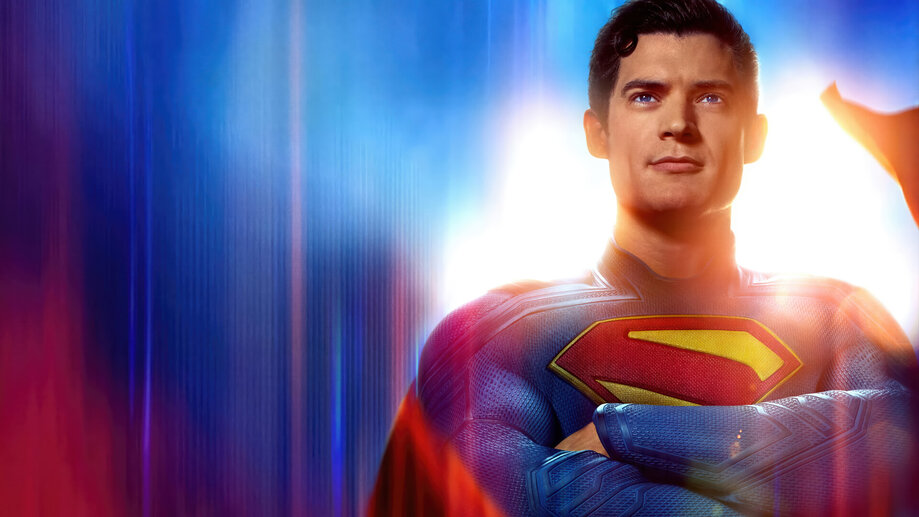
Superman (2025)

 https://img.uhdpaper.com/wallpaper/superman-2025-movie-david-corenswet-749@5@g

James Gunn's supercharged Superman will make a gazillion dollars for the DC Cinematic Universe by offering the diehard and ever-faithful a rejuvenatingly broad mix of action and comedy, heroics and villainy, a tiny bit of romance between the Man of Steel (David Corenswet) and the intrepid reporter Lois Lane (Rachel Brosnahan) and an incorrigible flying dog.
The redoubtable Nicholas Hoult chews scenery as Lex Luthor, the alopeciated brains behind a military-industrial-complex-machine that is creating super soldiers that he hopes to sell to the U.S. for future battles with "metahumans," the most prominent being his archenemy Superman.
Other intrigues lie beneath the surface of this lunacy, but not for long as battles between good and evil take on increasing levels and dimensions of strangeness. It's all great fun, with guffaws mixed in with the earth-shattering punches.
Gunn has referred to Superman as an immigrant, which has riled some folks who, apparently, don't want politics mixed in with their comic book lore.
I suppose we should not show them the famous picture of George Reeves as Superman from the television series of the '50s, posed in front of the American flag.


Adolescence, Episode 3


Episode 3 of Netflix's Emmy-nominated miniseries Adolescence is essentially a two-player one-act that features Erin Doherty as psychologist Briony Ariston and young Owen Cooper as accused murderer Jamie Miller. Both Doherty and Cooper are nominated for their performances, which are, to use that criminally overused expression, "amazing."

The series features wonderful writing, direction and camerawork and is the story of the investigation into the death of a local school girl. A young classmate is arrested on charges of having followed her and stabbed her to death after a brief argument. Police used CCTV footage to identify the suspect, who is detained and examined by psychologists to determine his mental capacity, that is, what does he "understand."

For most of the episode, the psychologist and the boy sit across from each other at a table. She begins the session brightly, and the boy seems cooperative but when talk turns to definitions of manhood, the temperature in the room spikes, then ebbs, then spikes again, even as the space between the two characters gets tighter.

Jamie, clearly emotionally unstable because of the bullying he's suffered at school and on Instagram, grows increasing threatening and Briony steels herself against the tirade, holding fast to her professionalism while feeling enormous unexpressed pity for the child. The last five minutes in the episode are riveting and devastating .... and heartbreaking.

What a ride!


Saturday, July 5, 2025

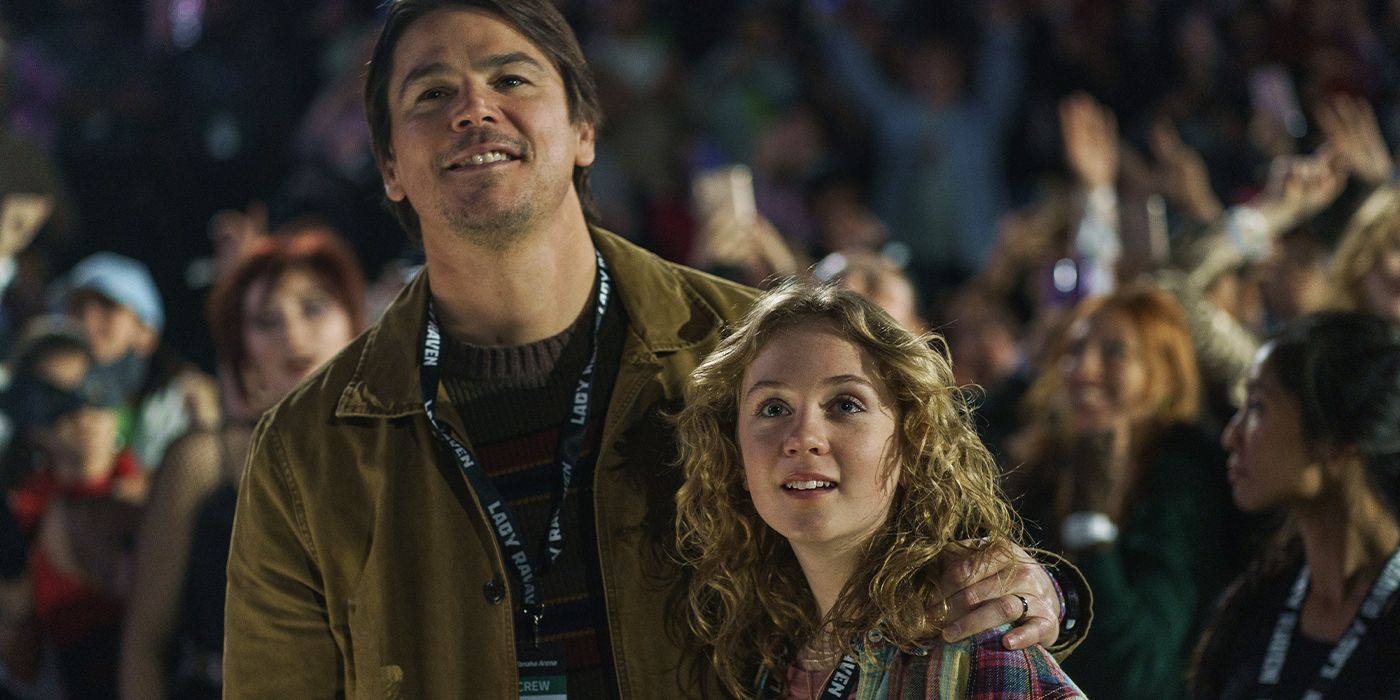
Trap

 https://static1.colliderimages.com/wordpress/wp-content/uploads/2024/07/trap-josh-hartnett-ariel-donoghue.jpg

M. Night Shyamalan's latest thriller, Trap, is mind-bending poser like his previous pictures but not in the same way.
The biggest question this film poses is "What kind of movie was it meant to be?"
Trap -- which stars Josh Hartnett, Ariel Donoghue, Shyamalan's daughter Saleka, and, inexplicably, Hayley Mills -- is set in Shyamalan's favorite location city, Philadelphia, during a Gen Z concert by superstar Lady Raven (Saleka).
Hartnett plays doting Dad and firefighter Cooper who takes daughter Riley (Donoghue) to the concert as a reward for outstanding work in the classroom. When Cooper sees the arena is overflowing with police and FBI he asks a concert merch vendor (a nice turn by Jonathan Langdon) and is told law enforcement received a tip the serial killer called The Butcher will be at the show.
The audience will discover pretty quickly that Hartnett is the suspect (though the movie never shows Cooper actually butchering anyone). The first two-thirds of the film is Cooper trying to evade the clutches of FBI profiler Dr. Grant (Mills) while not raising his fangirl-daughter's suspicions.
A master fabricator with an ingratiating smile, Cooper nearly pulls it off with some implausible scheming involving a gullible concert usher (Shyamalan in his obligatory cameo) and Lady Raven, herself.
The last act, which introduces Cooper's wife and Riley's mother Rachel (Alison Pill), is where Shyamalan's exposition goes off the rails and the narrative action becomes inert. In fact, what action there was happened mostly on the concert stage where Saleka (who wrote and performed original music in the film) holds court.
Overall, Shyamalan's script is weak in tension and emotional cohesion and clarity. Are we supposed to pull for the handsome Father of the Year who dismembered a dozen people or pray that the Swat team stomps him into the ground? Is Shyamalan's story about sociopathy, societal breakdown, parental dysfunction or the hidden perils of teen pop?
Some might say it doesn't matter, but I couldn't stop wondering which kind of picture I was watching, and that puzzlement made the talk and mugging on the screen a real distraction.


Friday, July 4, 2025

F1: The Movie


In traditional Hollywood terms, director Joseph Kosinki's $200 million racing baby, F1: The Movie, is a sure winner.
With the epic cinematic wattage of both star Brad Pitt and charismatic "It Boy" Damson Idris, a solid script with a trusted and familiar arc, and thrilling racing footage that is hypnotic and dramatic, F1 is destined to be a crowd-pleaser that will easily recoup the money poured into this sprawling, globe-trotting production.
Pitt plays Sonny Hayes, a skilled itinerant racer who abandoned the circuit about 30 years before we meet him. A former team member / now team owner Ruben Cervantes (Javier Bardem) offers Sonny, who was prodigious in his 20's but is now living in a van, an opportunity to drive regularly for him and, perhaps, rekindle his youthful fire. Sonny responds with hesitation but agrees to help his old friend dig himself out of a financial pit by putting some wins on the board.
Sonny, now 60, partners with Idris' Joshua Pearce, a young and gifted driver who is not looking to be mentored by a "never was." The early interactions between the two is what we would expect in the world of motorsport, and the slow melting of the ice between them is the heart of the picture.
Kosinki puts all of the pieces in place -- including a potential romance with chief car designer Kate (the wonderful Kerry Condon of The Banshees of Inisherin) and lets the picture's swift pace carry viewers along, delivering the goods in the movie's inevitable standoff with one of the picture's producers, British F1 driver Lewis Hamilton, whose face appears on camera only briefly.
It is to Kosinski's credit that the film doesn't wander too far off the track -- even though a few cars do in several heart-stopping scenes -- so we never lose sight of the intensity of Sonny's quest for ... well, that's not entirely clear, but one thing we know, it's not about "the money."

Sunday, June 22, 2025

28 Years Later

 P


Oscar-winner Danny Boyle returns to the director's chair for the third installment in the "28" series about the walking un-dead, which began more than 20 years ago. The second film in 2007, which was a worthy sequel, was directed by Juan Carlos Fresnadillo.

Boyle knows well how to match the visceral with the cerebral, and this continuing story of a viral catastrophe that has wiped out most of human life in the British Isles offers audiences bucketfuls of blood and gore but also the biggest of beating hearts at its center.

On an isolated Scottish island that has been converted into a fortress against the ravenous zombie hordes on the mainland, Jamie (Aaron Taylor-Johnson) takes his young son, Spike (Alfie Williams giving a nicely assured performance), across the channel so that the boy might kill his first infected resident with bow and arrow. They left ailing, delusional mother Isla (Jodie Cromer) in the care of a neighbor.

As one might expect, the expedition is dreadful and the lad only successful is making one kill, his tenderness getting the best of him. While hiding from the pursuers in an empty loft, young Spike sees a fire burning in the distance and wonders about its source. After narrowly escaping a swift and determined alpha male, the boy learns from another man in the compound that the fire is quite likely tended by a mad physician who has lived on the mainland for decades.

After seeing his father keeping company with another woman, Spike decides to sneak his mother out of the encampment, across the channel and to the doctor, who he hopes can determine what is wrong with her and make her better. 

Their journey is not without peril, and Boyle masterfully ratchets up the tension while simultaneously putting essential meat on the bones of the relationship between the boy and his mother.

Fans are undoubtedly curious if 28 Years Later will be the end of the run. The final five minutes of the picture strongly suggest much more is in the wings, waiting to spring out on audiences.


Brokeback Mountain redux


Only a few Hollywood filmmakers rival Ang Lee's directorial sensibilities. This scene from Brokeback Mountain (2005), a film that is appearing in a lot of movie buffs' newfeed recommendations for Pride Month, shows Lee's mastery of tone, pacing and environment and the magic he can pull from actors.

It is clear to me that the three cast members in this brief scene -- Heath Ledger as Ennis Del Mar, Roberta Maxwell as Jack Twist's mother and Peter McRobbie as Jack's father -- understand intimately what this painful meeting means for each of their characters: loss, regret and disconnection through their estrangement from the murdered Jack.

That the Twists' home has been whitewashed -- inside and out -- is important to note but not because of what happened to their son. It was (is) common practice to whitewash what can't be replaced or or restored to newness. We do that with structures and sometimes with ourselves. In this instance, the house is old and in need of brightness, but the dinginess is bleeding through.

The cross on the wall in the kitchen tells viewers this is a "Christian home," ruled by a man who both loved and resented his son. He knew who his son was and, in so many words, attributed Jack's death to his own poor choices. He's hurting FOR his son and BECAUSE of his son but he won't let his son go with Ennis to the mountain that, in the father's eyes, took his life.

It's the near silent connection between Ennis and Jack's mother (Maxwell's performance is so powerful) that lifts the sadness of this scene just a bit. Her invitations to Ennis to visit Jack's room -- where Jack is still her son, innocent and alive -- and to visit the Twists again filled the frame with sincerity and truth. Lee trains the camera's lens on the mother tenderly putting the bloodied shirts in a paper bag, like she's handling Ennis heart -- which, in a way, she was.

Yes, the film is a classic for its uncompromising depiction of love between Jack Twist and Ennis Del Mar but it is also celebrated for its unblinking portrayal -- in these five minutes -- of how hate can sear all of us to the bone.


Sunday, June 8, 2025

From the World of John Wick: Ballerina


From the World of John Wick: Ballerina has the kinetic mayhem that has made the venerable series so addictive, but it lacks the elegant grace notes that made Wick's World so freaking entertaining, both unbelievably violent and surprisingly droll.
 
Director Len Wiseman certainly has an appealing star in Ana de Armas, whom I first noticed in her star turn as the lovable but gutsy caregiver in the original Knives Out (2019). In that film, she faced down an enraged family of entitled brats who resented being cut out of the patriarch's will while his wealth is bequeathed to his gobsmacked nurse (Armas).
 
In the latest Wick chapter, Armas's Eve doesn't let her exotic beauty detract, too much, from her deadliness -- she's all business as an orphan reared and trained by the doyenne of death, The Director (Anjelica Huston), in the same murky world of the Ruska Roma that created John Wick's Boogeyman. 
 
Eve is determined to avenge her father's death when she was a child, a hit by a clandestine cult led by a character called The Chancellor (a menacing Gabriel Byrne). Fan favorite Ian McShane has a cameo as Winston, the cagey manager of the New York Continental hotel, who rescued Eve from a shelter when she was a child. She visits Winston as an adult, and he, reluctantly, gives her information on a cult member (Norman Reedus of The Walking Dead) who is hiding in Poland. And she's off. 
 
Ballerina delivers the exotic scenery and runway fashions of previous entries but little of the knowing winks that lightened the murderous proceedings and amazing body count.
 
Keanu Reeves makes an appearance in Ballerina as Wick, but his part feels underwritten and, frankly, that is disappointing but understandable, I suppose. Wick's future in the franchise's narrative world is not certain; Reeves has said he doesn't have the knees for the balletic hand-to-hands that have driven the action in 80 percent of the series.

The Phoenician Scheme


Oscar-winner Wes Anderson is a contemporary absurdist filmmaker. His peers include Yorgos Lanthimos (The Lobster), Charlie Kaufman (Being John Malkovich) and Lars van Trier (Melancholia). Fans know when they sign on to screen a film by any of these or the dozen or so other masters of the irrational that it won't be easy sledding -- but it will be rewarding.
 
I am fascinated by Anderson's approach to movies and admire his pictures more than I enjoy them, usually. That is, Anderson never fails to stun me with the complexity of his constructions, but they don't generate warmth. His worlds are like architectural dioramas in their precision and that seems to be where he enjoys putting most of his attention. Still, he draws cinematic A-list actors to his projects for the unique experiences. 
 
Even though each of his films, including his latest The Phoenician Scheme, has leading actors -- in this case, Benicio Del Toro, Mia Threapleton and Michael Cera -- the performances are deliberately monotonic -- impressive in their lack of expressiveness. There is nothing classical about the casts' line deliveries because the movies' resonance is in their visual sumptuousness. One could study stills from The Phoenician Scheme's opening credits for the depth of its scenic design -- colors, shapes, textures. The art direction for all of his pictures -- including his animated features -- is brilliant. And therein lies my fascination with his work.
 
The Phoenician Scheme, like others of Anderson's more recent features, has a story (co-created with frequent collaborator Roman Coppola) that bobs and weaves between sense and nonsense. Del Toro plays an unprincipled industrialist, Zsa-zsa Korda, who has a plan to get investors to foot the bill for a plant of ambiguous purpose built in an area that one might assume is the Middle East. 
 
The lucky survivor of multiple assassination attempts, including one that opens the film, Korda has arranged for his estranged daughter Liesl (Mia Threapleton) to sign on as his heir and executor in case his luck runs out. He does this despite his having nine male heirs and Liesl's intentions to soon take vows to enter a convent.
She accompanies him on a ridiculous tour of his investment partners to see which of them can be convinced / coaxed / tricked into covering an anticipated shortfall, the Gap. They are joined by a German tutor named Bjorn (Michael Cera), who Korda assigns additional duties as his administrative assistant. Little goes as planned -- as one might expect -- but lessons are learned, identities clarified and trust earned or restored.
 
At least, this is MY reading of The Phoenician Scheme's convoluted plot. It actually might be about something else, but that hardly matters, as the point of the movie is not in the story but in the telling.


Sunday, June 1, 2025

Friendship


To say that Tim Robinson's brand of cringe comedy is an acquired taste is to understate the obvious for those familiar with his Netflix comedy series "I Think You Should Leave, " and, frankly, I was only able to hang with this champion of discomfort for two episodes before having to bail -- ditto for Dave, Rami and Fleabag.

For Friendship, Robinson (primarily a television performer) teams with writer / director Andrew DeYoung and perennial chummy good-guy Paul Rudd to tell the story of bad relationships getting worse despite the efforts of all parties involved to .... nah, I can't say they work hard or smartly to avoid the series of disasters that follow Robinson's Craig meeting new neighbor Austin (Rudd).

Craig is a gratingly clueless manchild married to cancer survivor / floral designer Tami (Kate Mara), who has renewed a relationship with her ex-husband. Craig and Tami are parents to the weirdly oedipal 16-year-old Steven (Jack Dylan Grazer). They live in suburbia in a stateless town named Clovis and are trying to sell their house.

When Craig, a predatory marketing consultant with no filter, meets local weatherman Austin, their friendship blossoms quickly but just as quickly starts to lose its petals ... in fistfuls.

The film is a series of bad notions that lead to worse problems and disastrous fixes. Though frequently hilarious -- both Robinson and Rudd are totally committed to the chaos -- the friendship spin-out might be exhausting for those who do not give themselves over to the insanity.

For those who stick with it, the genius in all of this stupidity might be in how it gets the audience to reflect on these enormously unlikable characters to see if we have any of their distasteful traits.

When viewed that way, Friendship might be a good thing. 

Wednesday, May 28, 2025

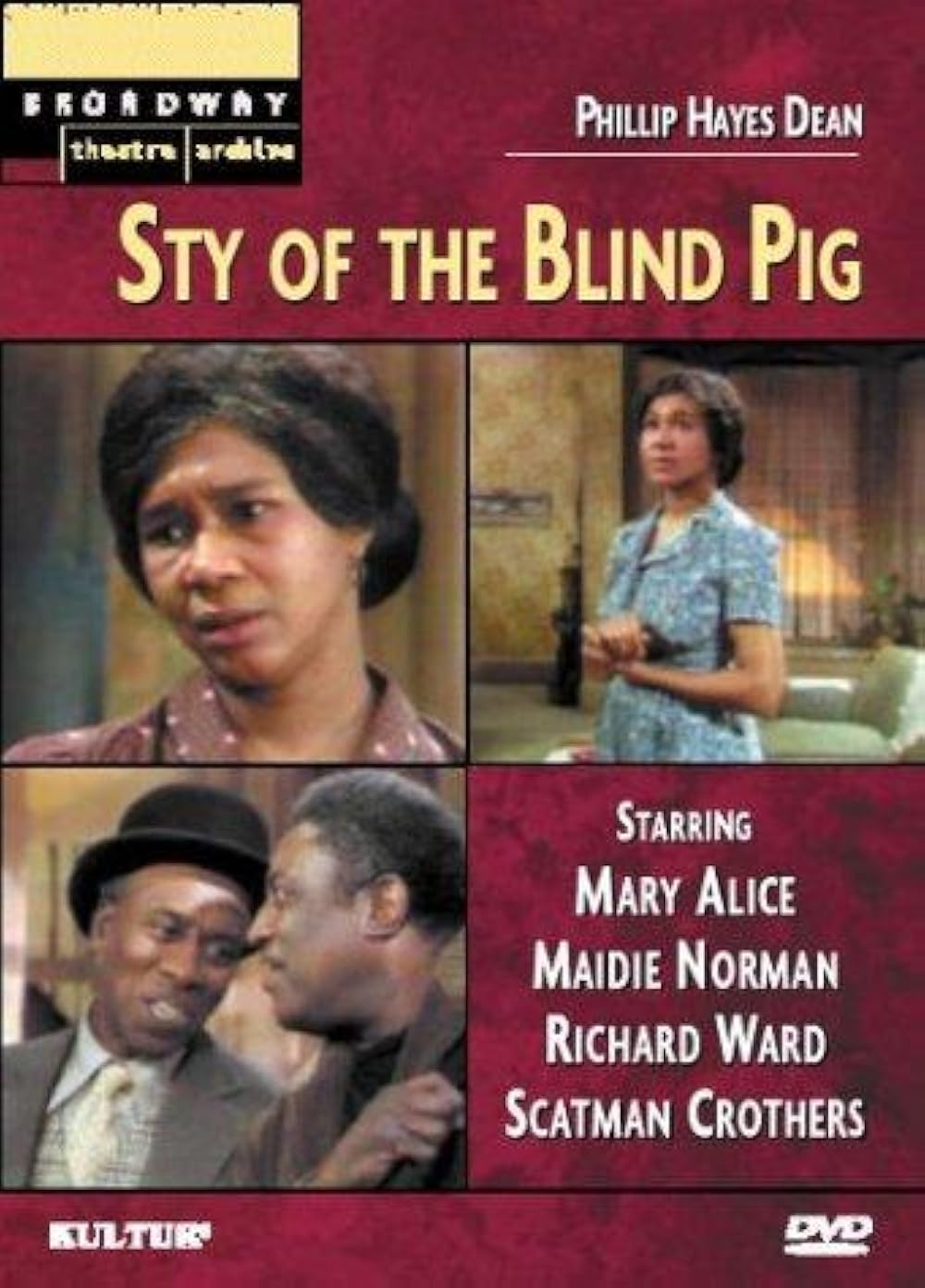
The Sty of the Blind Pig (1974)

 https://m.media-amazon.com/images/M/MV5BMTQ1ODU5NjY1Ml5BMl5BanBnXkFtZTcwNzA3NDQyMQ@@._V1_FMjpg_UX1000_.jpg


In 1974, PBS broadcast a production of Philip Hayes Dean's The Sty of the Blind Pig, masterfully directed by Ivan Dixon. (A link to the YouTube video of the Blind Pig broadcast is below.) Dixon was best known to television audiences as Kinchloe on Hogan's Heroes and to movie buffs as the male lead in Nothing But a Man (1964), opposite Abbey Lincoln.
Like Lorraine Hansberry's A Raisin in the Sun (1959), Dean's play is set in the Chicago apartment of a Black family -- the scolding and sanctimonious matriarch Weedy Warren (Maidie Norman) and her long-suffering and repressed daughter Alberta (Mary Alice). The pair are frequently visited by Weedy's brother, called Uncle Doc (Scatman Crothers), a boozy gambler who is trying to get back to the sportin' life in Memphis.
It's the early years of Civil Rights protests in the South, a region both familiar and foreign to the Warrens. (Out of sight ...) From her seat by the living room window, Weedy needles her daughter about her appearance and secretiveness, and Alberta pacifies her mother with grudging compliance. Uncle Doc ineffectively referees disputes between his sister and his niece.
One day, a sightless musician who calls himself Blind Jordan (Richard Ward) knocks on the door asking after Grace Waters. Alberta lets him in, tells him she doesn't know the person he seeks, but soon joins him in his search, which, as one might expect given the symbolism invested in the story, leads to the discovery of a different kind of grace.
Being a theater kid, I remember lending the broadcast my rapt attention, not picking up on every nuance Dean had woven into his wonderful play but enough to appreciate how important this story was. Later, I came to further understand that it was telling the world, at least that portion that watched public television, something about the souls of Black folks.
The play was also telling African Americans who may have been feeling as if they were in another country that life was unavoidably complex, a strange mix of the profound and the profane, and the blood spilled over the years -- in slaughterhouses, under lynching trees and in city streets -- may have blinded some to the truth but gave others greater clarity.
This play is one of many I would likely never have seen if public broadcasting had not scheduled programs that spoke to all of us.


The Name of the Rose redux

 https://imgsrc.cineserie.com/2022/07/wordpress-cs-format-image-3-1.png?ver=1


    In Jean-Jacques Annaud's 1986 thriller The Name of the Rose, Sean Connery stars as a spirited and independent medieval Franciscan friar, William of Baskerville, investigating the deaths of monks in a remote Italian abbey. He is accompanied by a youthful novice named Adso, played by Christian Slater. They discover much devilment going on within the hallowed halls of the monastery, which is also a scriptorium for copying sacred texts and a library for storing them.
    William, a sagacious scholar, was originally called to the monastery to take part in a debate on heresy but found himself called to ferret out "Satan's work." All of this is happening during the time of the Catholic Church's inquisitions, when skeptics and questioners were harassed, driven out or burned in the name of God.
One fascinating aspect of both the film and the novel, written by puzzle-master Umberto Eco, is the maze of stairs that is the heart of the monastery, connecting the various stacks where the books are stored but rarely distributed or read. Only a few librarians can navigate the stairs.
    What a wonderful metaphor for religious and political institutions that use byzantine dogma to confine followers and confound outsiders. They are unholy bedfellows, aren't they?
    Those of us who are serious and sane and trying to make sense of GOPer religio-politico plans and messages might find ourselves looking at a nonsensical web of half-baked concepts, fully baked falsehoods, circular reasoning, contradictory claims and hypocrisy. Venturing in is not for the faint-of-heart, and if we're not up to the challenge might find ourselves overwhelmed.
    Those familiar with the film know how it ends -- the real culprits are revealed, the human devils are struck down and the structure built to sustain all of this deceit destroys itself, reduced to ash and rubble.
    Amen.
 

Mission: Impossibe -- The Final Reckoning


Christopher McQuarrie has directed the four most recent Mission: Impossibles; the earlier installments were directed by a variety of other Hollywood notables -- De Palma, Woo, Abrams, Bird.

McQuarrie's pictures, which have all starred Tom Cruise as undercover superstar and reliably insubordinate agent Ethan Hunt, are big concept / big bang thrillers known for complicated plotting and outlandish stunts, many Cruise famously performs himself. 

Except for the stunt work, the films are constructed like the TV series of the '60s and '70s -- receive the mission, pull together the squad, infiltrate the enemy, set a "plan" in motion that will result in the bad agents turning on themselves and adjust to the occasional setback and disruption along the way.

Speaking of bygone days, Cruise will be 63 in July and looks amazing for a man of his years. We're left to wonder if it's all diet and routine (with a little Scientology thrown in) or are those abs as sculpted as his face, which still reads as "toothy badass" from where I sit. But no matter, his features and feats meet expectations of audiences drawn into the spiraling world of intelligence, counter-intelligence and existential threat.

The Final Reckoning delivers on all fronts with Cruise's Hunt "finishing" a mission left hanging two years ago (Dead Reckoning), in which a malevolent artificial intelligence called The Entity sits poised to take over the nuclear arsenals of all of the nations on the planet that have them -- including, of course, the U.S.  Hunt has a key that will give him access to the soulless brain.

After receiving a plea from the president (Angela Bassett) to turn himself in, hand over the key and not go rogue again, Hunt reassembles what remains of his team (Ving Rhames, Simon Pegg and Hayley Atwell) and recruits a few more (Pom Klementieff and Greg Tarzan Davis) to locate The Entity's brains in a sunken Russian submarine near the Bering Strait, use the key to immobilize it and avert global annihilation. He must do all of this while avoiding being captured or killed by the evil master mind Gabriel (Esai Morales) who wants to takeover control of The Entity, which we're all aware would be impossible.

McQuarrie, who also co-wrote the screenplay, takes full advantage of the series' expansive story world, taking audiences on a trot through world cities, into the blood-chilling depths of the northern Pacific and finally into the skies above South Africa, with the countdown to disaster pushing events along. 

Final Reckoning will make hundreds of millions in theaters and through streaming but it will also continue Hollywood's steady drumbeat of resistance against whitewashing through deliberately inclusive casting and narratives that challenge bias, ancient tropes and stereotypes. Yeah, Ethan Hunt is still a white guy saving the world, but the messaging in Final Reckoning is clear -- "team" means all of us.

Saturday, May 17, 2025

Final Destination: Bloodlines


I am unabashed in my affection for the Final Destination franchise, whose pedigree extends back to the beloved X-files TV series and film.
As I told a friend, I'm a fan of the movies' commitment to the conceit that Death is a relentless hunter and humans are the game. Some of the game try mightily to outwit the hunter and might successfully delay being bagged, but, in the end, the hunter will win. Well, we ARE talking about Death here.
Death as an invisible but sentient force is off-putting to some, and I can appreciate that, but this creation is not original to this 25-year-old franchise. In fact, Final Destination clearly draws from classical myths about the Fates, the goddesses of destiny who stood above all other deities.
In Bloodlines, audiences -- who come for the creative gore more than the story, which, again, is pretty much set -- are introduced to an extended family whose grandparents escaped death back in the '60s because of a premonition.
College student Stefani (Kaitlyn Santa Juana) is failing her courses because she can't sleep, her dreams interrupted by scenes of people dying in a catastrophic disaster in a tower restaurant called The Skyview.
Directors Zach Lipovsky and Adam B. Stein stage a long but impressive opening sequence that is unmatched by any of the individual "reckoning" moments to follow. Still, it whets the appetite for a feast of tension and "tongue-in-cheekery". The movie is loaded with visual and musical puns. (You'll never hear the Isley Brothers' "Shout" or any of the other music in this picture quite the same. LOL)
Stefani meets with her grandmother Iris (Gabrielle Rose), whose premonition at The Skyview saved many lives from being lost in the tower collapse. Iris has been locked away in a fortress that keeps Death at bay; but Death has been playing catch-up and reaping the descendants of those who survived and Iris has been keeping track. It's not clear at this point how she's been doing this since she never leaves her home. In fact, we must take it on faith that she's been able to get food and other vitals without human contact for 30 years.
As the Fates would have it, Iris is brutally killed in one of Death's ingeniously diabolical Rube Goldberg convoluted Mousetrap-y devices (for those who remember both Goldberg and the board game), leaving her granddaughter covered in bloody goo and holding a book that Iris said might change her family's fate.
On the matter of the family -- an assortment of annoying Boomers and Z-ers -- they all seem to be addled and vacuous, incautious and weary of dire warnings of Death descending. They're easy to like for their comedic appeal and not difficult to say goodbye to, as is inevitable.
Amidst all of the death and devastation, writers Guy Busick and Lori Evans Taylor have inserted some grace notes about family unity that sweeten, just a bit, the bitterness of watching death by lawnmower, MRI and runaway train, but doesn't turn the movie into a sentimental goo.
It's gooey, yes, but not sentimental, except in Tony Todd's appearance as William Bludworth, a medical examiner and one of The Skyview survivors who worked with Iris to create her fortress and track the deaths. Todd was actually in the final stages of cancer when he filmed his scenes for Bloodlines and died in November.


Sunday, May 11, 2025

Thunderbolts*


Jake Schreier's Thunderbolts* (the asterisk is part of the title) takes the Marvel Cinematic Universe in a refreshing direction, with stars Florence Pugh and Sebastian Stan leading a decidedly second-string ensemble of stealth fighters as the heroic misfits Russian assassin Yelena Belova and American Winter Soldier Bucky Barnes, respectively.
 
They are two of a half dozen supercharged agents, who dub themselves the Thunderbolts, the reason is an important part of the film's narrative world. They are set up to fail by a scheming CIA chief whose name is too long to include here and played with impressive cheek by Julia Louis-Dreyfus. The agents are loose ends of a discredited program that was operating off-the-grid and wreaking havoc with the nation's readiness to respond to intergalactic threats (see every previous MCU installment for that history).
 
What make Thunderbolts* such an enjoyable update of the Marvel Universe's sprawling mythology is the affability of the players and the brightness of the writing. The humor is on the scale of Deadpool and Guardians of the Galaxy in profane sharpness; the language is decidedly street but the picture's treatment of the characters' backstories is inventively tender. 
 
The wild card in this picture is Lewis Pullman's disarming character Bob Reynolds, a morose laboratory subject with extraordinary abilities and a lethal dark side. Bob's character fits the movie's reflective tone and the narrative's turn away from numbing sequences of CGI-enhanced battles to more quieter moments that explore the human connections among folks who are quite a bit more than human. Yes, the picture is still loaded with amazing stunts of daring and destruction but is much more than that.
 
The choice to make this turn in a reliable winning formula may reflect the creative team's determination to state, both directly and obliquely, that our survival depends on getting over our pettiness, we all have our bad shit, and pulling together to save and serve the collective. 
 
It's a needed message presented for our consideration.


Sunday, May 4, 2025

The Surfer


Few living film actors do "crazy" with greater ease than Nicolas Cage.
In Irish indie director Lorcan Finnegan's The Surfer, Cage physically, mentally and emotionally unravels on the screen. He raves as the title character tries to get access to a local beach near his childhood home in Australia. He wants to surf the waves with his teen-aged son (Finn Little), and grows increasingly, well, Cage-y, as the film progresses.
Cage's unnamed character's quest is frustrated by a band of bully boys led by an oily shaman (Julian McMahon), who terrorize and drive out foreign visitors, and drives mad The Surfer and The Bum (Nicholas Cassim) living in his car on the rise above the beach after losing his son to the bully boys.
The film is pretty contained, the action limited to the environs of the bully boys' surf-side enclave and the parking lot just above. Cage's outsized personality fills the space but it doesn't make up for the noticeable lack of wave footage or actual surfing.
The ending unfolds predictably, but leaves one to wonder if taking the film in a different direction -- one that explored more deeply its psychological underpinnings -- would have been a better call.
As it is, the audience is left pondering if the delusion we had been riding stops at the shore or extends all the way to the horizon.


The Accountant 2


It's been a fat minute since the Gavin O'Connor / Ben Affleck vehicle The Accountant stormed into theaters in '16, so one can be forgiven if some of the finer points of the tale of the killing autist have receded.
As introduced then, Affleck's Christian Wolff was a CPA by day and a hired assassin during his off-hours, which seemed to exceed those during which he was actually crunching numbers. In the O'Connor-directed sequel, Wolff's backstory is filled in a bit -- he's a member of a tribe of savants trained by a school for neurodivergent sleuthing youths, led by the nonverbal Justine (Allison Robertson). Wolff's stony facade begins to crack and let some sunshine in, slowly and winningly.
Wolff is recruited by Treasury Department agent Marybeth Medina (a returning Cynthia Addai-Robinson) after her mentor Ray King (the always-welcome J.K. Simmons) is killed while trying to recruit a spectral assassin known as Anais (Daniella Pineda) to find a missing mother and son trapped in a trafficking operation near the U.S. / Mexico border. Medina needs help making sense of the web of King's investigation, so she calls "the accountant," following the final message King left.
Wolff joins the case and brings in his rival assassin brother, Braxton (nobody plays a cantankerous but lovable sibling better than Jon Bernthal) and off they go, kingpins and cartels swirling about. In the moments between the mayhem and the gun-play, writer Bill Dubuque (The Accountant, Ozark) has scripted some nice scenes that explore just a bit of the nature of autism (everything about this story feels timely AF) and the brilliance (and affection) that lies beneath the surface of what some shallower minds would perceive as an empty well.
As with the first film, the body count is enormous but certainly not on the scale of the John Wick series. Still, Affleck -- a performer who doesn't always get a fair shake from critics -- is on his game from start to finish. Yes, the movie hits its mark and plays by the numbers but it's a thoroughly enjoyable and humanizing picture, too.


Eagle Eye

  In 2008, D.J. Caruso directed an AI-gone-rogue thriller that starred real-world PITA Shia LaBeouf and the always welcome Michelle Monaghan...