
Monday, July 10, 2017
The Dinner

Spider-Man: Homecoming
Young
British actor Tom Holland (The City of Z) has such a sure command of
the role of Peter Parker / Spider-Man that Marvel fans will undoubtedly
feel safe with him. Set in that precarious world of high school
rivalries and crushes, Jon Watts’ Spider-Man: Homecoming merges the
drama of those uncertainties with larger threats and shows the young
hero – whose drive might outstrip his nascent abilities – struggling
with doing the right thing for the right reason in the wrong way
(perhaps). Holland is joined by high wattage co-stars Michael Keaton as
the villainous Vulture, Robert Downey Jr. as Parker’s “mentor” Tony
Stark / Iron Man, Marisa Tomei as Aunt May and a host of colorful
younger actors that keep this clever and kinetic story about alien-arms
dealers grounded in what’s important – Academic Decathlon and School
Dances.
Baby Driver

British
director Edgar Wright (Hot Fuzz, Shaun of the Dead) commits boatloads
of exuberance, wit and musical savvy to the ridiculously entertaining
Baby Driver, a film fueled by the adrenalin of its oh-so-winning cast,
led by the brilliantly nimble (and preternaturally adorable) Ansel
Elgort (The Fault in our Stars) and featuring Jamie Foxx, Jon Hamm and
Kevin Spacey. Elgort stars as the oddly monikered Baby of the title, who
is the iPod-addicted getaway driver for a crew run by Spacey’s Doc.
Baby is working off a debt with hopes of going straight after one last
job – then he meets diner waitress Debora (a wonderful Lily James) and
things get, as they say, complicated. Wright’s direction matches the
precision and daring of Baby’s driving, which is breathless and
thrilling. But on top of some award-worthy camera work and editing is a
seamless musical storyline the likes of which I’ve not heard used in
such a way in a film. If you love a good cops and robbers story and
sharp, creative moviemaking, you’ll no doubt find Baby Driver quite a
ride. And you’ll want the soundtrack, without question.
Sunday, June 4, 2017
Wonder Woman
Patty Jenkins' Wonder Woman is a bombastic estrogen rush of an origins pic that, frustratingly, must have its demi-goddess heroine (Gal Gadot) succumb to the charms of a man. Sure, the man is uber-stud Chris Pine, but still. Must feminine empowerment in film always come with deflowering? Was there fear that coming from an island of women that she was not into men and had to prove otherwise? The picture scores a few points for its ragtag, multi-culti band of World War I henchmen -- an Arab, a Scotsman and an American Indian -- but loses a couple for a pretty startling -- and perhaps Freudian -- WW skewering of the movie's high-wattage but unarmed baddie played by Danny Huston. The last big battle of the gods is an electrifying display of the power of love -- a message that's reiterated in the film's epilogue and treacly voiceover.
Saturday, May 20, 2017
Alien: Covenant
The Aliens franchise always drew me with its nightmarish incubation premise and social contexts about godless industrialists, the impotency of the military option in battling a cagey and ghostly enemy and its array of supremely ballsy women. Ridley Scott's Alien: Covenant is more of the same but with amped up space tech and more onscreen eviscerations. Michael Fassbender stars as Walter, the synthetic crew member in a colonization expedition that goes bad after a cosmic disruption wrecks part of the ship, kills the ship's captain and tosses other crew members out of their hypersleep and into an ill-advised but essentialy plausible detour to a habitable but craggy planet fans first visited in director Ridley Scott's Prometheus (2012). There's blood in them hills.
Friday, April 14, 2017
Easter movies


Only one of these five favorite Easter movies features Jesus as the central on-screen characters. Maybe I find the more compelling Easter stories show how the message of the carpenter from Nazareth affected others. Jeffrey Hunter was a Hollywood handsome Jesus in King of Kings in 1961, one of the more entertaining portrayals on film, IMO. The same year Anthony Quinn, not Hollywood handsome, starred as the criminal who was released by Pilate in exchange for Jesus. Although nobody knows what happened to the man after he was released, in Hollywood Barrabas, himself, would end up on the cross.
In 1959, Charlton Heston was still riding the wave for starring as Moses in The Ten Commandments three years before when he was cast as Judah Ben-Hur, in the film that included, according to some, a veiled gay subtext in the relationship between Ben-Hur and his boyhood friend, Messala, played by Stephen Boyd.
In 1953, Richard Burton played the ambitious Roman tribune who was ordered to oversee the Crucifixion and was haunted either by guilt or Jesus until his martyrdom, with Jean Simmons, in the last reel. I'm still not sure why she gets into heaven for just loving her man but ...
And one year after The Robe, Victor Mature reprised his role as the tribune's Christian slave in Demetrius and the Gladiators, in which Demetrius, who has inherited the robe from his martyred master, becomes a champion in the arena but falls away from the faith before realizing his error and returning to the fold as a choir of angels sings.
The Last Supper


Many Christians observe the Thursday before Easter as the day of the Last Supper -- quite likely one of the most painted (and parodied) events in Christian Scriptures. Here are a few of my favorites -- the traditional with an especially wan St. John leaning into Jesus' lap, a contemporary homies rendition, Anthony Falbo's cubist dream, the cast of Battlestar Galactica in an homage, and a most righteous gathering of brothers.
The Crucifixion

I believe for many in the Christian tradition, The Crucifixion is the central emblem of sacrifice and forgiveness (or expiation as I learned in Catholic school). Others might view it as simply evidence of human sinfulness or corruption. And others have used it to condemn Jews. (Using the Crucifixion to persecute others is ironic and tragic.) I'd only recently discovered George Bellows' striking painting but it has become one of my favorites. It contains the abjection of that sad day but other intangible qualities as well. I'm especially drawn to the purple figure at the foot of the cross. Such loss and despair. Peace
Tuesday, April 4, 2017
Life

Sunday, March 12, 2017
Logan

A Cure for Wellness

John Wick: Chapter 2

Chad Stahelski’s John Wick: Chapter 2, as the title suggests, picks up the story where its predecessor left us – with the bruised and bloodied but seemingly indestructible Wick (Keanu Reeves in a role that demands very little acting but a lot of close-contact sparring) intent on reclaiming his purloined Mustang from a Russian mobster whose son nicked it in the first movie (and killed Wick’s dog) and was eviscerated by Wick for his trouble. The opening sequence sets the muscle-and-mayhem bar pretty high as Wick pulverizes automotive and human bodies that are in his way. By the end of the opening 10 minutes of Chapter 2, the body count is already approaching 50 with bullets flying through flesh and crania and blood covering walls, floors and furniture. It’s a riot. But there’s no rest for the weary because even after deciding to retire from the assassin’s trade, a visit from an effete Italian mobster (Riccardo Scarmarcio) pulls Wick back in. The sequence that follows Wick as he gets outfitted by assorted specialists in the Italian weapons and sartorial underground is great fun, played tongue-in-cheek, but not as amusing as the gunfight in the Roman catacombs or the fight on a New York subway between Wick and fellow killer Cassian (Common) or the one in a mirrored exhibit in an art museum. Yes, it’s all deafening and numbingly violent but so outlandish that you can’t help but go with it. It’s Grand Guignol theater but at least they don’t kill the dog this time.
Saturday, February 11, 2017
Elle

The Founder
John Lee Hancock’s biographical melodrama The Founder is the story of Ray Kroc, the man who built the McDonald’s empire with tenacity and grit and then strong-armed ownership of the company from the two brothers who began it in San Bernardino. When we meet Kroc (a never-better Michael Keaton), it’s the 1950s and he’s schlepping milkshake mixers from pillar-to-post trying to get fast food restaurants to take interest. No dice until his office receives an order for eight from a small burger joint in the middle of nowhere in California. The two brothers, Mac and Dick (John Carroll Lynch and Nick Offerman, respectively), have created a “speedy” system that can turn burger orders around in seconds and an iconic symbol of their enterprise – golden arches. Kroc, a silver-tongued devil, convinces the brothers he can take their model and reproduce it across the country. The three enter into a contract and almost immediately Kroc begins to chafe under the deal; he’s weary of the brother’s “take it slow” mentality and he finds effective ways to work around them, expanding the company in the Midwest. His myopia and egotism lead to trouble with his wife (the reliable Laura Dern) and with the brothers, who worry they’re losing control of their business. A showdown is inevitable. All of the performers and the period details are terrific. The take-away? Being a slimeball can indeed pay off.
Split
M. Night Shyamalan’s films are so hit and miss that it’s actually entertaining to bet on how and when any given picture will fall apart. His latest, Split, is more successful than most, mainly because it features James McAvoy in the gimmicky role of Kevin, a man with 23 separate personalities who kidnaps three teen-aged school girls to sacrifice to “the beast within.” We get a glimpse at only half-a-dozen of them. Why then 23? More is more? The gutsiest of the kidnapped girls, Casey – played by Anya Taylor-Joy of last year’s best horror flick, The Witch – proves to be a formidable adversary for the lot of them and for the most disturbing of reasons. (I believe this is the film’s anticipated twist.) Though the movie has some creep to it, especially Casey’s backstory, it’s the relationship between the crowded Kevin and his shrink, an earnest but miscast Betty Buckley, that is the real mystery
Patriots Day

Jackie

Wednesday, January 4, 2017
Fences
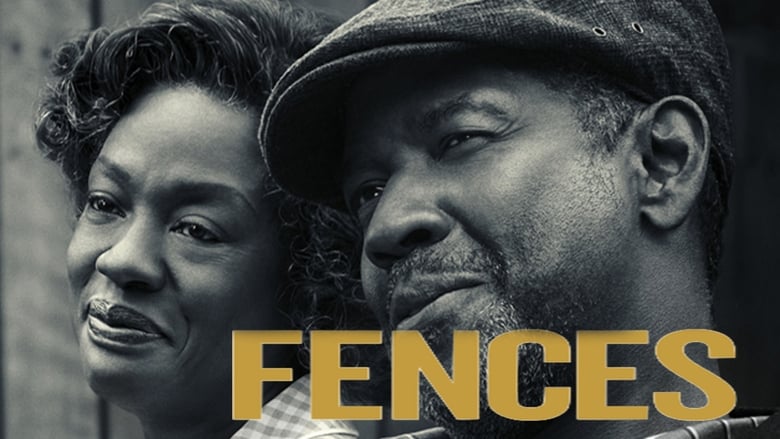
Short Cuts: Denzel Washington has taken the searing lyricism of August Wilson's Fences and put it on screen with the play's length edited a bit but with no harm rendered to its classic beauty. Washington and co-star Viola Davis reprise their Tony-winning performances as a middle-aged black couple in 1950s Pittsburgh who find their worlds being changed by forces they are not fully prepared to face. In this regard, the eponymous fence symbolizes safety from threats both societal and spiritual; it's a brilliant metaphor. Yes, as with many other 20th century African American literary works, Fences examines "deferred dreams" but without a hint of sentimentality or artifice. It's a powerful film.
Lion
Short Cuts: Garth Davis delivers tears of sadness and joy in Lion, a weepy true story of a 5-year-old Indian lad who gets lost 1,000 miles from home, enters the world of India's lost children and is adopted by an Australia couple, saving him from certain deprivation and exploitation. The rest of the film is 25 years on, as the boy wonders about his home, his mother and siblings. Dev Patel plays Saroo as an adult but the marvelous child actor Sunny Pawar is the heart of this moving tale, which delivers breathtaking vistas and squalor but too much cinematic shorthand to draw us deeply into what must be an amazing story.
La La Land
Short Cuts: Damien Chazelle's La La Land, like his earlier triumph Whiplash, is an exuberant film that explores the territory between love and passion, with the world of music as the backdrop. In La La Land, a jazz pianist (Ryan Gosling) and an underemployed actress (Emma Stone) are finding little more than frustration and disappointment in Los Angeles, where being good or good enough doesn't pay the rent. What does pay the bills (playing Christmas tunes in a restaurant and serving up lattes on a movie studio lot) is soul-deadening, but the two find both inspiration and misdirection in each other. Chazelle raises (often literally) the quality of this boy-meets-girl tale with splendid (and frequently quite hummable) tunes and dance numbers that aren't as dazzling as Astaire and Rogers but are enchanting, nonetheless. La La Land is a beautiful and affirming picture. Highly Recommended.
Friday, December 16, 2016
Manchester-by-the-Sea

Casey Affleck lumbers through Kenneth Lonergen's Manchester-by-the-Sea like a man with the burdens of the world draped over his shoulders, and, in a sense, they are. In a commanding, heartbreaking performance, Affleck plays Lee Chandler, an apartment handyman in Quincy, Massachusetts, when we meet him. Lee is the fellow who recedes into the background in bars and at parties until he's riled, and then he's a bruiser. Most of the time he doesn't seem to want or need anything the world offers but he's also by turns listless and combative, and it seems to have something to do with events back home in Manchester-by-the-Sea. When he receives word his older brother, Joe (Kyle Chandler), has suffered a heart attack, Lee drives the 90 minutes to see about him but is greeted with news of his death and later that he's been named guardian of his 16-year-old nephew, the randy and rambunctious Patrick (Lucas Hedges). Over the course of the film, we discover why Lee is directionless and empty, why his wife (Michelle Williams) left him and what he needs to do to best care for Patrick. Not one of the answers to these questions is expected, which is the beauty of the raw and masterful script by Lonergen.
Friday, November 18, 2016
Moonlight

We follow the taciturn hero of Barry Jenkins' amazingly affective film Moonlight from roughly age 8 to 26, as he is battered physically by neighborhood bullies, emotionally by his drug-addled mother and psychologically by his own queer identity.
Each of the actors playing the lead -- who variously goes by Little (Alex Hibbert), Chiron (Ashton Sanders) and Black (Trevante Rhodes) -- are uncannily expressive despite collectively delivering less than two pages of dialogue during the film's 2 hour run. Their eyes, their sloping shoulders, skittish response to physical contact and their silences speak powerfully of their disconnection from life and of the soul-deadening effect of the Liberty City projects.
Early in the film, the boy Little is befriended by a drug dealer named Juan (an Oscar-worthy Mahershala Ali) and his girlfriend (Janelle Monae), who feed and shelter him when the boy's mother (a terrific Naomie Harris) runs him off so that she can consort with a boyfriend or fire up crack rock, which, coincidentally, she buys from Juan. Through those caring surrogates the boy begins to feel worthy of love though his journey to self-acceptance is by no means assured.
It is that uncertainty (possibility?) that makes Jenkins' film so resonant, as resonant as it is beautiful. Highly recommended.
Friday, November 11, 2016
Arrival

Saturday, November 5, 2016
Hacksaw Ridge

Friday, November 4, 2016
Doctor Strange

Subscribe to:
Posts (Atom)
Digger
Alejandro G. Iñárritu's pitch-black, politically-bombastic Digger has so much structural and narrative depth that it will challenge ev...

-
 As you closely read the two photographs above -- Sally Mann's "Candy Cigarette"(top) and Diane Arbus's ...
 -
The release of a new Paul Thomas Anderson (PTA) feature film is an event for cinephiles because the decidedly quirky and celebrated auteur...
-
 Episode 3 of Netflix's Emmy-nominated miniseries Adolescence is essentially a two-player one-act that features Erin Doherty as psychol...
